Simon, you and others keep bringing up deep stops, we don't see them. Our dives are 200-350ft , runtimes 2.5 plus. We don't see these mystical deep stops. Sometimes we see them on the computers, but by the time we get there, that they are gone. The number of times were ever had to do any actual deep stop,I can count on one hand with 5 fingers left. Our stops at the deepest start at 100ft. I don't consider that a deep stop. As I stated above, perhaps all this banter on deep stops is only applicable to extreme dives, and for most divers not even relevant.Hello Jeff,
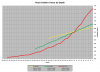
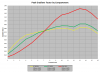
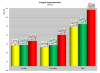
The one thing that the formal evaluations of deeper vs shallower stop approaches have taught us to date is that there is nothing magical about the bubble model approach of protecting fast tissues from supersaturation early in an ascent that could be expected to facilitate "longer bottom times, less deco". Every time these approaches have been carefully compared in human experiments the result is more DCS and / or more bubbles and / or more inflammatory activation in the deeper stop approaches. The face validity of these results is enhanced by ISS evaluations like the ones posted by UWSojourner here which show greater supersaturation levels in the deeper stop approaches.
Your obvious scepticism about all this is (quite understandably) based on your own good outcomes when using VPM. I don't dispute these outcomes for one picosecond. Nor would I recommend you change if VPM is working for you. But for perspective, it is important you understand that humans are not all equal in respect of vulnerability to DCS. Some are bubblers and some are not. In my life as a diving physician I have seen divers who have been doing outrageous things (off the scale of any deco algorithm we use) for many years with no problems. My point is that your successful use of VPM says little about it as a source of truth for the wider community. That is why we do proper studies, and I have mentioned the results of those performed to date above.
It is entirely plausible that your diving would be even safer (that is, you would be further away from the edge of risk) if you used an approach with less emphasis on deep stops. To illustrate this (entirely hypothetically), lets say you have done 3000 dives, and your risk using VPM is 1 case in 4000 dives. It would therefore not be surprising that you have not had a case of DCS yet. But another approach might have a risk of 1 case in 6000 dives. The alternative would therefore be safer. This is just hypothetical and not intended to reflect reality in any objective sense. But the best evidence we currently have is that bubble models have no particular qualities that facilitate "longer bottom times, less deco" and I wanted to discuss how the fact that you appear to have reaped such a benefit so far may be an attribution error, and that it is your physiology rather than the model that is working for you at the moment.
Simon M
Now the 400ft dive we're planning, had some deep stops, and we will adhere to those. Logically it makes sense to slow bubble formation.
I make no claim that vpm is for everyone,I just bristle at all these deep stop debate, as from our perspective, it's not even applicable and seems more academic than practical. We just don't see them.


 I am further comforted by the fact that the most current, widely recognized consensus within the decompression scientific community points towards the direction in which I have moved.