
Simon Mitchell
Well-Known Member
Ross,
Do you not think it might be time to revise your ideas? I am happy to cop the accusations of deception, trickery, distortion, manipulation, arguing with myself etc etc in the interests of ensuring that the facts are at least available to people. But now we have David (one of, if not the most prominent decompression modeller(s) currently working in the field) and Neal all saying the same thing. You will also have noted the post from Iain Smith, himself a medically qualified scientist. We can't all be involved in deception, trickery and distortion.
What does it take to make you change your view on something? Because to me it is starting to look like you won't change no matter how overwhelming the indications that you should, and that your motive, whatever it is, is not to find the truth as best we can currently define it.
Just a few posts back you were claiming this paper supported your view; now that it has been pointed out that it doesn't, you are trying to criticise it.
There is that "normal" word again. There is nothing "normal" about bubbles forming in places they should not be. Leaving that aside, what is your point? You seem to be inferring that there are two different processes for bubble formation; one that occurs when you are within your decompression protocol ("normal" bubbles), and another when you are in "breach of protocol". You further infer that we therefore cannot draw any conclusions about diving within protocol from these "breach of protocol" studys. The overwhelming liklihood is that there are no differences in the mechanisms of bubbling between provocative and non-provocative dives (where "provocative" indicates a breach of protocol), but rather that a provocative dive is more likely to (but not always!) trigger a greater expression of the same process.
No its not. It depends on how you define "decompression stress". You are defining it in terms of compliance with a decompression algorithm, but in fact, the best way to see VGE (and Neal has made a similar point several times) is as a measure of decompression stress in their own right. Forget about your decompression protocol.... if a diver has Grade 4 VGE, that is high decompression stress even if their dive complied with the decompression protocol. Similarly, if a diver has no VGE (on a properly conducted survey) then that is low decompression stress largely irrespective of the dive they have done.
Simon M
Do you not think it might be time to revise your ideas? I am happy to cop the accusations of deception, trickery, distortion, manipulation, arguing with myself etc etc in the interests of ensuring that the facts are at least available to people. But now we have David (one of, if not the most prominent decompression modeller(s) currently working in the field) and Neal all saying the same thing. You will also have noted the post from Iain Smith, himself a medically qualified scientist. We can't all be involved in deception, trickery and distortion.
What does it take to make you change your view on something? Because to me it is starting to look like you won't change no matter how overwhelming the indications that you should, and that your motive, whatever it is, is not to find the truth as best we can currently define it.
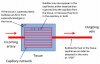
Here are some further complications in the test data we have on hand from the test with dual frequency doppler, and observed intra / extra vascular microbubble. (1).
Just a few posts back you were claiming this paper supported your view; now that it has been pointed out that it doesn't, you are trying to criticise it.
Are we looking at everyday normal dive microbubble growth?? Or the result of a serious injury and breach of protocol?
There is that "normal" word again. There is nothing "normal" about bubbles forming in places they should not be. Leaving that aside, what is your point? You seem to be inferring that there are two different processes for bubble formation; one that occurs when you are within your decompression protocol ("normal" bubbles), and another when you are in "breach of protocol". You further infer that we therefore cannot draw any conclusions about diving within protocol from these "breach of protocol" studys. The overwhelming liklihood is that there are no differences in the mechanisms of bubbling between provocative and non-provocative dives (where "provocative" indicates a breach of protocol), but rather that a provocative dive is more likely to (but not always!) trigger a greater expression of the same process.
With three hours of missed deco, and 20% injury rate, these subject would have been under extreme decompression stress, but 66% of the pigs had a Low VGE. This a clear example showing how using VGE as a stress measure - is not consistent.
No its not. It depends on how you define "decompression stress". You are defining it in terms of compliance with a decompression algorithm, but in fact, the best way to see VGE (and Neal has made a similar point several times) is as a measure of decompression stress in their own right. Forget about your decompression protocol.... if a diver has Grade 4 VGE, that is high decompression stress even if their dive complied with the decompression protocol. Similarly, if a diver has no VGE (on a properly conducted survey) then that is low decompression stress largely irrespective of the dive they have done.
Simon M
Last edited: