Diving too carefully?

You have no basis for your claim that shallow stop profiles will make more extravascular bubbles;


Its the same argument and that you use against deep stops, where you say: the higher supersaturation in tissue after a dive is giving more VGE.

Basic physics and the central concept of decompression theory. If some supersaturation makes extravascular micro-bubbles, then it stands to reason that more supersaturation will make more/larger extravascular micro-bubbles.

If microbubbles are in extravascular tissue, then our best control of these is to limit supersaturation in ascent. Its why we do decompression stops, and if you like, deep stops.

You can't have it both ways Simon.


....... that bubble models could control extravascular bubbles better than another approach while at the same time producing higher numbers of VGE.


You have no basis for making that statement. We have no information to suggest that these two bubble sources are the same. The details so far are conducive to the long standing theory of independent growth of each.

You are just grasping at straws Simon, trying to invent stories to suit your arguments in the worst possible way.


All deco models are concerned first and foremost with preventing symptoms of DCS. Go and look at your copy of Bennett and Elliott, in Bill Hamilton and Ed Thalmann's chapter on "Decompression Practice", after mentioning both intravascular and extravascular bubbles, they clearly state:


Expect, that VGE does not directly cause DCS in 99.99% of us. We have millions of dive samples every year, from all types of diving, all with VGE to show that fact.


2/ Sure, but you will need to a/ abuse the procedure, or b/ have defective circulation, or c/ have other health issues, and more.

Which one of these applied to Neal's 4 cases of cardiopulmonary DCS?

VGE can clearly cause direct harm. This thread has already contained discussion of cardiopulmonary symptoms ("chokes") associated with intravascular bubble loads that are high enough to overwhelm the lungs filtration ability and impair effective gas exchange. This has been well demonstrated in animal studies, and we have had four cases in our lab. One of these was beautifully captured in one of our NASA studies. Very high bubble loads preceding the onset of mild but escalating symptoms of coughing, retrosternal pain, and anxiety. Rapid descent brought rapid resolution of the symptoms; it could very well have been a life-threatening situation had the fast action not been taken.


Animal studies are aggressive testing with deliberate efforts to force injury. So that would be a procedural matter - going too fast to the point of destruction.

The goal of the NASA testing mentioned above, I am told, was to speed up the pre breath process for EVA. One would expect the experimenting to be on the edge at some point. So that would be a procedural matter again - going too fast.


But in normal dives, we don't do these aggressive procedures, so we don't encounter the issue.
 
Last edited:
I trust you have seen Neal's comment.


Yes I did. It's a pleasure to read Neals posts. What a difference there is writing style between he and you. Neal keeps to facts, gives a honest and balanced assessment of the information at hand.

Neal seems is arguing for increased safety on the grounds of possible improved long term health, and a general decrease in overall risk. That's fine by me, and I agree with his reasoning.


You on the other hand, are in a frenzy to twist this all into yet another anti-deep stop/bubble model message. You over hype the immediate dangers, distort the information on the topic, employ scare tactics and endless deception, so you can bully your agenda through. This doesn't help anybody Simon.


I suggest you think about taking a softer approach.
 
Last edited:
You on the other hand, are in a frenzy to twist this all into yet another anti-deep stop/bubble model message. You over hype the immediate dangers, distort the information on the topic, employ scare tactics and endless deception, so you can bully your agenda through. This doesn't help anybody Simon.


I suggest you think about taking a softer approach.


There is absolutly no personal gain for Simon in debunking deep stops

The ramafacations of twisting results to

"yet another anti-deep stop/bubble model message. You over hype the immediate dangers, distort the information on the topic, employ scare tactics and endless deception, so you can bully your agenda through"

would be considerable. I am quite sure the scientific comunity would disown any person found guilty of this I am equaly certain all the other reserch scientists involved in the studdy would round on who ever was discrediting their work from the inside.

Can you give one single example of personal gain for Simon in this?

This is not a personal opinion discusson where two sides of the story have some points of equal merrit. This is a scientist and qualified medical doctor taking time out of his buisy schedual to bother to explain this stuff in detail to people who in the main arn't qualified to understand it.

The only agenda I have seen is the desire to prevent misinfoirmation from people who may have some influance in the diveing comunity.
 
Its the same argument and that you use against deep stops, where you say: the higher supersaturation in tissue after a dive is giving more VGE.

Basic physics and the central concept of decompression theory. If some supersaturation makes extravascular micro-bubbles, then it stands to reason that more supersaturation will make more/larger extravascular micro-bubbles.

If microbubbles are in extravascular tissue, then our best control of these is to limit supersaturation in ascent i.e. deep stops.

You can't have it both ways Simon.

No its not the same argument, and I'm not trying to have it both ways Ross. As you are perfectly well aware, published analyses of deep and shallow stops profiles have demonstrated that deep stops protect fast tissues early in the ascent (yes, less supersaturation at that point in time) but at the expense of greater supersaturation in slow tissues later in the ascent. In these same profiles deep stops were associated with more VGE in actual testing, implying that the protection of the fast tissues early is not effective, and that the consequent increase in supersaturation in slow tissues later is a disadvantage. The reference is:

Doolette DJ, Gerth WA, Gault KA. Redistribution of decompression stop time from shallow to deep stops increases incidence of decompression sickness in air decompression dives. Naval Experimental Diving Unit Technical Report 11-06, 2011.

This production of more VGE with deep stop ascents from decompression dives in comparison to shallow stop profiles has been corroborated by other researchers in France.

Blatteau JE et al. Bubble incidence after staged decompression from 50 or 60msw: effect of adding deep stops. Aviat Space Environ Med 2005;76:490-2.

Similarly, consistently high VGE grades after deep stop decompressions have been reported by the Croatian group, though this was not a comparative study.

Ljubkovic ML et al. High incidence of venous and arterial gas emboli at rest after trimix diving without protocol violations. J Appl Physiol 2010;109:1670-74.

Thus for you to suggest that shallow stop profiles will result in more supersaturation and VGE is completely at odds with the current published literature.

You have no basis for making that statement. We have no information to suggest that these two bubble sources are the same. The details so far are conducive to the long standing theory of independent growth of each.

What "long standing theory of independent growth of each?" Can you please provide a reference to that theory? I have been studying decompression sickness my entire scientific career and I have never heard of this theory. Extravascular and intravascular bubbles are both derived from supersaturated gas in the tissues. Are you seriously trying to suggest that there is one reservoir of supersaturated gas that drives intravascular bubble formation and a separate one that drives tissue bubble growth? Within a tissue, the growth of intravascular and extravascular bubbles is inextricably linked by the local inert gas supersaturation pressure that is driving both processes.

You are just grasping at straws Simon, trying to invent stories to suit your arguments in the worst possible way

Well, I am in good company then..... here is Neal's answer to you on the same issue from 4 separate posts:

1. Efforts to suggest that intravascular bubbles are somehow a completely unique thing does not make sense.

2. It is not valid to talk about microbubbles in the bloodstream as different from microbubbles in any other tissue.

3. If the research community had any reason to believe the genesis of bubbles was wildly different between blood and non-blood tissue, we would probably have some evidence at this point. We do not.

4. The Bennett and Elliott chapter does not state that the process of bubble formation is fundamentally different in different tissues, and the best evidence we have also supports a fairly consistent formation process. I think it is time for a new question.

Expect, that VGE does not directly cause DCS in 99.99% of us. We have millions of dive samples every year, from all types of diving, all with VGE to show that fact.

A ludicrous statement whose flaws have been pointed out both by Neal and myself. Gareth also tried explaining it to you a few pages back. Your statement is like saying that decompression doesn't hurt us because millions of divers decompress with no problems every year.

It has been explained to you many times that lower grades of VGE (which are much more common than high grades) are not associated with DCS. It has also been explained to you many times that there are a set of circumstances that probably have to line up for VGE to be harmful. If you wish to read about them and educate yourself I would be happy to send you this:

Mitchell SJ, Doolette DJ. Pathophysiology of inner ear decompression sickness: potential role of the persistent foramen ovale. Diving Hyperbaric Med 45, 105-110, 2015

But at the end of the day the data tell the story. High VGE are associated with an increased risk of DCS to an extent that has motivated organisations like the DCIEM to use VGE grades in their decompression table development. Are they wrong? Is Neal wrong (you seem to just ignore his answers that disagree with you)? Are all the scientists who use VGE as the outcome measure in the decompression experiments wrong?... because you say so on the basis of an unsophisticated idiosyncratic interpretation of the facts?

The goal of the NASA testing mentioned above, was to speed up the pre breath process for EVA. One would expect the experimenting to be on the edge at some point. So that would be a procedural matter again - going too fast.

All decompression that follows a ceiling is riding on someone's definition of an "edge", but I'll let Neal comment on that if he wishes. But didn't Neal mention that others had done the same decompression with no problems?

But in normal dives, we don't do these aggressive procedures, so we don't encounter the issue.

Can I ask Ross, in your career as a helicopter mechanic, how do you anticipate you would have acquired the insight to strongly argue what we do and don't "encounter" in sick divers? How would your awareness of such issues stack up against, for example, a diving physician who has spent 25 years manning diving emergency hot lines and treating many hundreds of divers with DCS?

Simon M
 
Last edited:
I am quite sure the scientific comunity would disown any person found guilty of this I am equaly certain all the other reserch scientists involved in the studdy would round on who ever was discrediting their work from the inside.

Trust me Mark, many of my colleagues look in on this thread (and others) from time to time, and the only criticism I get is that I am mad for engaging with him.

But you are right.... I could not possibly go on line and make arguments that I cannot support or that my mainstream colleagues would be likely to contradict.

Simon
 
Yes I did. It's a pleasure to read Neals posts.

Ross.

I'm glad you enjoy reading Neal's posts. So do I.

I am sad, however, that you don't appear capable of comprehending them. You behave as though he is here to support you, even though he has politely disagreed with just about every strong stance you have taken in this thread. For example, on the fundamental issue of whether VGE should be ignored he has directly contradicted you. He has described your attribution of VGE harm to "defective circulation as "not valid". He has discounted your claim that VGE and tissue bubble formation are independent events on at least 4 occasions. I could go on.

Anyway, I look forward to more of Neal's posts, as I'm sure you do.

Simon M
 
Arterial gas emboli in altitude-induced decompression sickness
Author and Affiliation:
Pilmanis, Andrew A.(Aerospace Medical Research Labs., Brooks AFB, TX, United States);
Olson, Robert M.(Krug Life Sciences, Inc., San Antonio, TX., United States)
Abstract: Exposure to high altitudes can result in the evolved-gas condition referred to as decompression sickness (DCS). Ultrasonic monitoring techniques have clearly demonstrated the presence of venous gas emboli (VGE) during decompression. Although important to DCS research and our understanding of the physiological mechanisms of this condition, Venus gas emboli have not been considered clinically hazardous, unless in extreme numbers.

http://ntrs.nasa.gov/search.jsp?R=19940007071

Sent from my PAP4500DUO using Tapatalk 2
 
Arterial gas emboli in altitude-induced decompression sickness
Author and Affiliation:
Pilmanis, Andrew A.(Aerospace Medical Research Labs., Brooks AFB, TX, United States);
Olson, Robert M.(Krug Life Sciences, Inc., San Antonio, TX., United States)
Abstract: Exposure to high altitudes can result in the evolved-gas condition referred to as decompression sickness (DCS). Ultrasonic monitoring techniques have clearly demonstrated the presence of venous gas emboli (VGE) during decompression. Although important to DCS research and our understanding of the physiological mechanisms of this condition, Venus gas emboli have not been considered clinically hazardous, unless in extreme numbers.

It then goes on to say that AGE are viewed with great concern, VGE can cross via the pulmonary circulation and the clinical implications are yet to be determined.

In all five cases, at the time of AGE onset, the VGE scores were high from all monitored locations.

It was also published in 1993 and quite likely opinions on VGE , much like deco theory, is ever evolving.
 
It then goes on to say that AGE are viewed with great concern, VGE can cross via the pulmonary circulation and the clinical implications are yet to be determined.

In all five cases, at the time of AGE onset, the VGE scores were high from all monitored locations.

It was also published in 1993 and quite likely opinions on VGE , much like deco theory, is ever evolving.

"It appears that this gas transferred from the venous side to the arterial side via either intracardiac defects or the pulmonary circulation."

This is exact citation of the part you mention. The important part I was trying to point to is:

"Venus gas emboli have not been considered clinically hazardous, unless in extreme numbers."

What mean not all VGE is bad, but extreme numbers. Unfortunately what scientists know now is only counting bubbles, not jet measuring their volume (diameter) and diferentiating them reliably enough. But as Neal say new tools are in developement so hopefuly this things will become clearer in future.
I sure would say avoid too high VGE scores, but where the safe line is it is still unknown. So we can not say all VGE is bad.

I think when we will be capable to measure diameter of bubbles and their phisical volume scientists wil be capable of more reliably say if/which VGE can make harm. For now they can only say when DCS present high grades of VGE is present too. Same they can say when VGE grades high not always (sometimes) DCS is present and that they still do not know for sure why.

Sent from my PAP4500DUO using Tapatalk 2
 
Last edited:
What mean not all VGE is bad, but extreme numbers.

Sent from my PAP4500DUO using Tapatalk 2

and that is where this discussion seems to be stalling. DCIEM have taken a bubble count of 2 as being the lower limit of extreme numbers. Other views might vary, but '"extreme" is neither quantitative nor definitive.

The way that I read this whole discussion is that one side is saying that VGE at any level is fine unless associated with underlying medical issues and the other side which is saying that VGE needs to be limited. My own opinion in this case is to side with the reduced VGE count argument as the counter argument does not appear to hold water. Should some more data become available, with the use of more sensitive equipment, I would reconsider my stance.

Wasnt it Dr Steven Hawking who developed a model of space in his early days and then completely debunked his previous model in his later works.

Models are models, not physiological fact
 
Arterial gas emboli in altitude-induced decompression sickness
Author and Affiliation:
Pilmanis, Andrew A.(Aerospace Medical Research Labs., Brooks AFB, TX, United States);
Olson, Robert M.(Krug Life Sciences, Inc., San Antonio, TX., United States)
Abstract: Exposure to high altitudes can result in the evolved-gas condition referred to as decompression sickness (DCS). Ultrasonic monitoring techniques have clearly demonstrated the presence of venous gas emboli (VGE) during decompression. Although important to DCS research and our understanding of the physiological mechanisms of this condition, Venus gas emboli have not been considered clinically hazardous, unless in extreme numbers.

http://ntrs.nasa.gov/search.jsp?R=19940007071

Sent from my PAP4500DUO using Tapatalk 2

Igor,

In an abstract that goes on to describe 5 cases of DCS all occurring in subjects who concurrently had high grade VGE, and in which the authors go on to propose that the mechanism of injury is right to left shunting of VGE, why is this the part you choose to cite!!!????

This abstract supports everything we have been saying. Low grade VGE are rarely associated with symptoms of DCS. High grade VGE (the one's Ross says we should ignore) are often associated with symptoms of DCS.

Simon M
 
You state above that greater SS causes more VGE microbubble.

Then you dismiss the same argument assertion that greater SS will also create more extravascular microbubble, i.e. shallow stop models.


Yes, Simon, you are trying to have it both ways.


I see you still trying to sell the Nedu study, despite every one of your arguments and "plausible explanations" on that test was found to be invalid or wrong.


Extravascular and intravascular bubbles are both derived from supersaturated gas in the tissues. Are you seriously trying to suggest that there is one reservoir of supersaturated gas that drives intravascular bubble formation and a separate one that drives tissue bubble growth? Within a tissue, the growth of intravascular and extravascular bubbles is inextricably linked by the local inert gas supersaturation pressure that is driving both processes. Simon M


Do you think they grow in tandem? Tissues on gas, then they off gas. Logic dictates that Bubbles will grow as extravascular in the tissue first. Then after gas leaves the tissue, the intravascular VGE has a chance to grow. I would expect its a different set of conditions that drives the growth and destruction of each bubble (if it could ever be measured so small). For those reasons, they should (and are) treated separately by decompression models and planning.

It's plain obvious that the 1:1 relation you imagine, does not exist. Using VGE is simply not a reliable or consistent indicator or gas load. The mere fact that high VGE does not create DCS is enough. Likewise, not all neurological DCS has high VGE either.


But where do "normal" sized VGE really come from? A 20-200um VGE bubble does come from a 5um capillary.


1. Efforts to suggest that intravascular bubbles are somehow a completely unique thing does not make sense.
2. It is not valid to talk about microbubbles in the bloodstream as different from microbubbles in any other tissue.
3. If the research community had any reason to believe the genesis of bubbles was wildly different between blood and non-blood tissue, we would probably have some evidence at this point. We do not.
4. The Bennett and Elliott chapter does not state that the process of bubble formation is fundamentally different in different tissues, and the best evidence we have also supports a fairly consistent formation process.

Simon M


Cross off 1, 3, and 4, while 2 is so vague without it original context

I didn't say or imply fundamentally.. or genesis, or completely unique, That is YOUR words again - you are arguing with your self again Simon. I hope you enjoy talking to yourself.
 
Last edited:
Igor,

In an abstract that goes on to describe 5 cases of DCS all occurring in subjects who concurrently had high grade VGE, and in which the authors go on to propose that the mechanism of injury is right to left shunting of VGE, why is this the part you choose to cite!!!????

This abstract supports everything we have been saying. Low grade VGE are rarely associated with symptoms of DCS. High grade VGE (the one's Ross says we should ignore) are often associated with symptoms of DCS.

Simon M

The abstract says nothing about low grade VGE and risk levels.

It's interesting what they did. Gathered up people who were previously prone to injury, and tested them again, with a result of an 80% hit rate. All of it skin bends - no cerebral.

Its a shame we can't take a strong stance like that in tech diving. Here instead the science community wants to sweep the obvious under the rug, and force everyone to pretend they have a bad circulation. Problem with that is, no one much will follow it for long.
 
Several points to raise.

First, the goal of our prebreathe reduction program (PRP) was to improve the efficiency of the oxygen breathing period preceding spacewalking. The goal of the program was definitely not to push the edges, but to optimize prebreathe while keeping an exceptionally low risk (the implications of a serious decompression event on orbit could be huge). There were 11 protocols designed and tested, each produce with great promise. It is worth noting that nine of them were rejected because of too much or, one one case, serious DCS. There are several take-home messages here. First, we need to do rigorous testing before patting ourselves on the back for our brightness. Second, the collective wisdom of a group of very bright individuals can easily be torn apart by legitimate testing. Third, smart scientists do not mind being proven wrong; it is the advancement of knowledge and understanding that are important. The willingness to change you position in the face of compelling evidence is a sign of strength, not weakness or failure. We are fortunate that NASA wants a high degree of confidence in any protocol approved for use. And guess what, even when they had protocols tested to confidence, they added an operational buffer.

Unfortunately for the diving community, most decompression algorithms have not been adequately tested, some extremely minimally. What we can learn from the saturation decompression studies (the astronaut situation) is that a cautious approach is warranted to avoid errors of overconfidence. We have plenty of data to show us what can happen when we overstep.

Regarding our technological capabilities in research, we are not just waiting for new tools, they have been evolving steadily. Reports of asymptomatic left heart bubbles were published in 2008. It was not that they existed for the first time, instead that the resolution of scanning devices improved to the point that they were easier to see. Much earlier in this thread I described work we presented at the UHMS meeting last month. To reiterate, we found left heart bubbles in 13% of the 287 technical dives monitored. We now know that left heart bubbles are not a guarantee of a bad outcome, but it reinforces the drive to keep bubble loads as low as possible, since crossover is more likely when there are more bubbles on the right side that can cross over.

The impact of deep stops is not that they target some different physical reality. It is actually quite simple; the extra time spent deep allows more inert gas uptake in the relatively undersaturated intermediate and slow tissues. This is simply a loading problem that subsequently produces a higher degree of decompression stress. If there is less uptake at depth, ascent to a relatively shallow stop has much less risk. The idea that deep stops controlled bubble growth is one of the armchair arguments that has not lived up to human testing. Reframing the argument does not improve the validity. As with all the the protocols we developed and subsequently saw fail, it is time to respect the data over the hand-waving.

Now, peer-review in science. It is great fun. You get to see the results of other investigators' work in advance of primary (research literature) public release. Your job is to look for weaknesses - in design, execution or interpretation - to make sure that the reports are reasonable. Not "truth" (again) since they are small snapshots; but reasonable additions to the literature. One of the greatest errors is to confuse yourself with your work. A peer-reviewer critical of a manuscript is addressing the words, not the person. I try to completely ignore who the author of a piece of work is so it does not affect what I say about the manuscript. For the record, the work of Simon Mitchell is really easy to review. It is almost always well-developed, appropriately interpreted, and clearly presented. He is a major asset to the medical, research and diving communities.

The next thing about peer-review is the importance of being diplomatic in criticism. The problem when too aggressive may come when the authors have the chance to rebut the review. Reviewers often make good points, but they can also make poor and even incorrect one. Knowing that you may have to eat crow reminds you to ask authors to "consider" or "clarify" rather than saying "you are wrong." I am determined to hold as much of that civility as is feasible in these discussions, but be aware that when those trained in scientific discourse flag something it is a good idea to put ego aside and consider it carefully. The flag often identifies something that truly needs attention. The key is being openminded enough to learn from the exchange.

The topic of decompression-induced bubbles has certainly generated some heat, but I think it is worth summarizing things that stand as broadly accepted in the diving science community. Bubbles can form in any supersaturated tissue - blood, brain, muscle, etc. Depending on where they form they may act locally or migrate. They do not have to migrate to act; they can cause problems where they form. Given the choice, a diver will be under less physiological stress if bubble formation is limited. Decompression stress is reduced by limiting time at depth and controlling the complex impact of exercise and thermal heating. Reducing depth reduces gas uptake, and spending more time in the shallow zone promotes safety by allowing more inert gas elimination, which will naturally reduce bubble formation. Decompression algorithms do not present truth, they may be based on some logic, but the only meaningful goal is to help enable exposures free of decompression injury. Building in safety buffers wherever feasible increases the likelihood of problem-free diving.
 
You state above that greater SS causes more VGE microbubble.

Then you dismiss the same argument assertion that greater SS will also create more extravascular microbubble, i.e. shallow stop models.

Ross, go back and read the post again. I explain the difference between shallow and deep stop profiles in respect of the patterns of "greater supersaturation" that they result in. Then I cite hard data that demonstrate that the pattern produced by deep stops after decompression dives (greater supersaturation in slower tissues late in the dive and at the surface) results in more VGE. As far as I am concerned, until you can produce evidence that refutes this, the argument is closed.

I see you still trying to sell the Nedu study, despite every one of your arguments and "plausible explanations" on that test was found to be invalid or wrong.

As judged by who, you? I am not going to get into this argument again Ross; there is 100 pages of it over on RBW for anyone who is interested. That debate did not reflect your above comment. I think it was more than 90% of respondents to a poll thought that the NEDU study was valid and relevant by the end of the debate? More important, the overwhelming majority of my scientific colleagues consider the study valid (see Neal's post above Ross).

Do you think they grow in tandem? Tissues on gas, then they off gas. Logic dictates that Bubbles will grow as extravascular in the tissue first. Then after gas leaves the tissue, the intravascular VGE has a chance to grow. I would expect its a different set of conditions that drives the growth and destruction of each bubble (if it could ever be measured so small). For those reasons, they should (and are) treated separately by decompression models and planning.

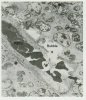
Intravascular and extravascular bubble growth is linked by the fact that they both form from the same supersaturated inert gas in the tissue. It is that inert gas supersaturation that all decompression algorithms seek to track and regulate. Here is a picture for you to look at Ross:

Tissue bubble rupturing into capillary smaller.jpg

It shows a bubble formed extravascularly (in a decompressed mouse) rupturing into a capillary (that is, becoming intravascular).[1] The rupture is occurring at the point labelled "a", and the capillary is the space containing the blackish shapes which are red blood cells (labelled RBCs). This bubble will soon appear downstream as a venous gas embolus. Can you explain how your model is going to treat the extravascular and intravascular parts of that bubble separately?

It's plain obvious that the 1:1 relation you imagine, does not exist. Using VGE is simply not a reliable or consistent indicator or gas load. The mere fact that high VGE does not create DCS is enough. Likewise, not all neurological DCS has high VGE either.

No one is suggesting a 1:1 relation; just that you can't unlink extravascular and intravascular bubble formation as you are trying to do. Your attempt to suggest that VGE are irrelevant because lots of divers have them without DCS has been addressed by Neal and I many times. If you don't get it now you never will.

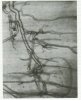
But where do "normal" sized VGE really come from? A 20-200um VGE bubble does come from a 5um capillary.

A comment that illustrates why you should stay away from discussions like this. You are assuming that the bubble would also have to be 20 - 200um in the capillary. Here is another photo for you to look at (bubbles growing in the skeletal muscle microcirculation in a decompressed rat) [2]:

Bubbles in microcirculation of decompressed rat smaller.jpg

Fairly self explanatory isn't it? The bubble does not have to have the same diameter in the capillary as it does in a larger vessel because bubbles form into sausages in smaller vessels. The commentary that goes with this is interesting for you to consider as well:

"The subsequent blockage of circulation to adjacent microregions results in stagnation anoxia. Bubbles from these regions can later break off, enter into the larger venous system, progress eventually to the vena cava, and finally reach the heart where they can be monitored with transcutaneous Doppler devices"

Couple of important messages for you in there Ross. First, these authors postulate that these microbubbles growing in the tissue capillaries from supersaturated gas in the tissue can cause damage in their own right. This is independent of the possibility that they will later cross a right to left shunt and be carried to other tissues in the arteries. Second, these bubbles, forming in the tissue capillaries, are the ones we subsequently detect with Doppler (something you have denied in the past).

At this point, I would suggest you seriously consider some of the advice contained in Neal's latest post. In particular, I ask you to reflect on how appropriate it is to promote a contrary view of established concepts of DCS pathophysiology just because the best data currently available suggest that use of a decompression approach (bubble models / deep stops) you promote has been shown to result in greater numbers of VGE. In that regard, and in the spirit of Neal's post, let me say that what I care about here is respect to the science we have around this subject. Its not perfect, and no where near complete, but it is definitely pointing us in several directions which you (Ross) are trying to reverse with no legitimate basis for doing so. I can tell you that if the evidence were to change convincingly I would happily promote deep stops again or change my views on pathophysiology etc, but from where we are at the moment, that seems unlikely.

Simon M

References:

1. Bennet RA. Fine structure of decompression sickness. In: Shilling CW, Beckett MW. Underwater Physiology VI: Proceedings of the Sixth Symposium on Underwater Physiology. Bethesda, MD, 1978, FASEB:595-599.

2. Powell MR, Johanson DC. Ultrasound monitoring and decompression sickness. In: Shilling CW, Beckett MW. Underwater Physiology VI: Proceedings of the Sixth Symposium on Underwater Physiology. Bethesda, MD, 1978, FASEB:503-510.
 
Last edited:
Yes I did. It's a pleasure to read Neals posts. What a difference there is writing style between he and you. Neal keeps to facts, gives a honest and balanced assessment of the information at hand.

It's interesting to see that you appreciate honest and balanced assessment of the facts without (I'd assume) resorting to personal attacks.

And yet you can't even wait for your next post to add in the following.

You over hype the immediate dangers, distort the information on the topic, employ scare tactics and endless deception, so you can bully your agenda through.
 
..mathematics.


Is that pure math or theoretical math

The problem with theoretical math is you often need to use a figure thats bassed on theory rather than fact in order to make the equasion work. Some theoretical math has been later proved to be correct dispite some staggering leaps of faith by the initial equation. Other equations have been proven wrong or inacurate due to outside factors.

I used to love Physics at school but soon became a little jaded by all the math that started out "asume your in a vacume"

Deep stops were a revolutionary concept in terms of decompresion planning, but after it was taken out of the vacume and tested on real world dives it has proven to be less than optimal. Not so much so that divers will be getting bent left right and centre, but enough to conclude shalow stop profiles are more eficient.

I have done deep stops for years, starting out with 10% GF low and in some cases even lower. I never got bent, but I now beleive had i done those dives on a 70% GF low I would have given myself a greater safety margen for the same in water time.

Sorry but no one switched to VPMB because it offered a deep stop profile with the same in water time. They swaped because it offered, or seemed to offer, significantly reduced decompresion for matching risk levels.

Words like eficiency and cleen decompresion were bandied about by the new users.

From what we know now theres nothing stoping divers doing VPMB type profiles but to maintain the safety margins with shalow stop profiles they need to extend their shalow stop profile. VPMBE being the obvious way forward

Having established that the VPMBE deco schedual will be longer than the 70/80GF profile, the question then remains is there a benifit in doing the VPMBE profile? Dispite the VGE count post dive being the same, was there some unknown benifit to the shape of the profile or as you would say, controling bubble growth at depth?

At the moment it would seem to be an unanswerable question

ATB

Mark
 
Back
Top