The relevance of the NEDU data to tech diving decompressions has been explained to you time after time. You either don't understand it, or don't want to accept it, or perhaps both. The face validity of the inferences drawn from the NEDU data has been markedly enhanced through extensive post hoc evaluation of the supersaturation data, and confluence with the results of 3 other studies of human decompression that have compared deeper vs shallower approaches. There are no contradictory studies at this time.
You have still not answered the questions:
Do you still believe inert gas supersaturation is important prior to arrival at the surface, but it doesn't matter after arriving at the surface? I would also be interested to know if your fundamental misunderstanding of this issue has affected your programming of VPM in any way because that could result in unsafe errors in the algorithm.
Based on your attribution of blame for Don's outcome to me, do you now accept blame for all cases of DCS that have occurred using deep stop approaches?
Simon M
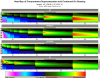
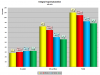
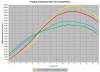
The irrelevance of the NEDU data to tech diving decompression has been explained to you time after time. All of the attempts by you and others to make a valid scientific connection, have been shown invalid or just plain wrong. You either don't understand it, or don't want to accept it, or perhaps both. The face validity of the inferences drawn from the NEDU data has been conclusively dismissed through extensive post hoc evaluation of the supersaturation data. Instead all that you can offer is eye candy graphs and junk science, and fake data points, all wrapped up in marketing fluff by Kevin Watts as shown above.
The same false interpretations is made with the results of 3 other studies of human decompression that have compared deeper vs shallower approaches. There are no complimentary studies at this time to support your claims.
You have still not answered the questions:
Do you still believe inert gas supersaturation is important prior to arrival at the surface, but it doesn't matter after arriving at the surface?
Simon M
Your question is moot: the two are not exclusive, and we have no methods available to manipulate surface supersaturation on its own. Our only control is dive supersaturation levels, and therefore that's the only dimension that matters. Further more the absolute value comparisons you want to make are irrelevant as can demonstrated by attempting to compare an NDL diver to a deco diver. Surface values are not important.
I would also be interested to know if your fundamental misunderstanding of this issue has affected your programming of VPM in any way because that could result in unsafe errors in the algorithm.
Simon M
Stop trying to make shit up... Your insulting attitude and this making false implications is a deliberate effort to manipulate the public again.
I remind you again... your deco theories and ideas
"new, more efficient, lower risk", as tested here in Don's dive, has failed, simply because it ignored the basics of decompression physics, and the experiences of pioneer divers.
Based on your attribution of blame for Don's outcome to me, do you now accept blame for all cases of DCS that have occurred using deep stop approaches?
Simon M
What a stupid question.
Lets see,.. there is Pyle stops.. not mine. There is GF stops... not mine. There is RD stops.. not mine. Other DIR stops... not mine.. There is Suunto stops.. not mine. There is RGBM stops... not mine. There is NEDU stops... not mine. There is VPM-B stops (Yount) .. not mine etc,etc.
I don't think I invented the deep stop (there are no Ross stops) but maybe you could have your marketing spin wizard cook up another eye candy graph.
.