
You are using an out of date browser. It may not display this or other websites correctly.
You should upgrade or use an alternative browser.
You should upgrade or use an alternative browser.
Prism 2: How negative when flooded?
- Thread starter MaxGuru
- Start date


Matthew DeBerry
New Member
17lbs (7.7kg)
It states this specification in the manual.
Hope this helps.
Cheers,
Matt
It states this specification in the manual.
Hope this helps.
Cheers,
Matt
Last edited:
Matthew DeBerry
New Member
This must assume that the unit won’t fully flood. There has to be more than 7.7 litres of airspace in the canister let alone the lungs and hoses.
We estimated the airspace in the JJ as between 15l and 20l, probably at the higher end. The Prism can’t be much different.
Attachments

Matthew DeBerry
New Member
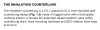
This portion states that essentially each CL is approx 3.5L. The bucket and head actually comprise relatively little volume in comparison due to a full scrubber taking up a majority of the bucket.
No idea on the JJ or how it relates to the Prism2.
Cheers,
Matt
No idea on the JJ or how it relates to the Prism2.
Cheers,
Matt
Attachments

nickb
The JJ Kid
So that's 7l straight off.This portion states that essentially each CL is approx 3.5L.
Even a full scrubber has a large volume of air in it*. Otherwise it wouldn't workThe bucket and head actually comprise relatively little volume in comparison due to a full scrubber taking up a majority of the bucket.
 Then there's at least a few litres of airspace around and below it.
Then you have all the loop hoses. That's got to be a couple of litres.
They must be similar in size is all I'm suggesting.No idea on the JJ or how it relates to the Prism2.
I think it's fair to suggest that even a catastrophic flood would probably not result in the loop fully flooding, but that's what the OP asked for and probably what should be planned for.
* This would be easy to check. Next time you have a scrubber to change, just leave it in the canister and fill the whole thing with water - see how much goes in.
Matthew DeBerry
New Member
So that's 7l straight off.
Even a full scrubber has a large volume of air in it*. Otherwise it wouldn't work
Then you have all the loop hoses. That's got to be a couple of litres.
They must be similar in size is all I'm suggesting.
I think it's fair to suggest that even a catastrophic flood would probably not result in the loop fully flooding, but that's what the OP asked for and probably what should be planned for.
* This would be easy to check. Next time you have a scrubber to change, just leave it in the canister and fill the whole thing with water - see how much goes in.
I do not have an engineering background and thus don't necessarily disagree with anything you are saying. What I am saying however is that the engineers who manufactured the Prism2, and thus supplied the spec's for which the manual was written, says that it is in fact 7.7L.
Without getting into a debate on how you extrapolated otherwise allow me to punctuate my point. As an instructor you rely on the specifications provided by the manufacturer when disseminating relative information to students so that they can safely operate the unit (in this case the relation of proper ballast based on manufacturer specs regarding a flooded unit).
I merely suggest that it is irresponsible to contradict manufacturer specs unless you have some sound evidence to suggest otherwise. Have you taken your Prism2 and flooded it as you suggest checking and come up with different numbers? Or are you basing your conjecture on a completely different CCR for which you are not certified/own and for which the OP was not inquiring?
Regards,
Matt
nickb
The JJ Kid
Yes. I own a JJ but I completely get your point. However, I have seen the Prism 2 up close and can see that it, like virtually every other rebreather, is based on a similar principle. I am an engineerOr are you basing your conjecture on a completely different CCR for which you are not certified/own and for which the OP was not inquiring?
7.7l of total internal airspace would not be anywhere near adequate for a rebreather that requires a reasonable dwell time in the scrubber. I'm also challenging your assertion that a full scrubber would not contain much air. I suspect it would still be mostly air - otherwise, as I said above, it wouldn't work.
If you're interested in finding out the truth, why not do as I suggested and find out? Personally, I don't give a monkey's as I own a JJ and know, having had a conversation with one of the guys involved with its creation, that it has at least 15l of airspace within it and I carry spare buoyancy (not ballast as you suggest) to cater for it fully flooding.
So that's 7l straight off.
That assumes that the counter lungs are full - which in diving is not the case.
Just consulted with my P2 manual and it is stated on page 116: Bucket total capacity = 1,75 gallon / 6.6ltr.
The lime do take up some space thus i would expect that the total volume of air in the scrubber basket with the scrubber installed would something in the neighborhood of 5,5-6.0ltr.
Please note that the scrubber is a Radial scrubber and thus a bit smaller than an equivalent Axial scrubber
(unfortunately i am at work for the next month thus i can not try fill the bucket with water with the scrubber inside........)
Thus if one is diving with minimum loop volume and have just taking a breath the lungs must be close to empty leaving only the bucket and hoses to at weight if totally flooded.
If one have just exhaled will be 2-4ltr. air in the counter lungs that can be exchanged with water and ad weight.
Thus the 17 pounds seems a fair and reasonable expectation in case of a total flood of the breather
The lime do take up some space thus i would expect that the total volume of air in the scrubber basket with the scrubber installed would something in the neighborhood of 5,5-6.0ltr.
Please note that the scrubber is a Radial scrubber and thus a bit smaller than an equivalent Axial scrubber
(unfortunately i am at work for the next month thus i can not try fill the bucket with water with the scrubber inside........)
Thus if one is diving with minimum loop volume and have just taking a breath the lungs must be close to empty leaving only the bucket and hoses to at weight if totally flooded.
If one have just exhaled will be 2-4ltr. air in the counter lungs that can be exchanged with water and ad weight.
Thus the 17 pounds seems a fair and reasonable expectation in case of a total flood of the breather
Well, have now test filled the whole loop system with water and measuring the amount during the fill. The findings are like this:
A full scrubber bucket will more or less also fill the rebreather head.
Scrubber bucket (without scrubber basket) contains 6,15 ltr.
Scrubber bucket (with a filled scrubber basket) 4,0 ltr,
(The water was left for 4 hrs in the scrubber bucket to allow maximum absorption by the lime, but it was not necessary to add water once the bucket was full)
Then the complete hose and counterlung assembly was filled. Worth mentioning is that i have the small 2,5 ltr counterlungs.
Total volume of the complete hose and counterlung assembly was: 7,0 ltr
(5 ltr from the counterlungs and 2 ltr from the hose assembly)
Thus in worst total flooding case scenario the Prism2 with small counterlungs will be:
7+4 ltr. =11 liter.
This in turn will add negative weight to the diver 11 x water density
(e.g. 11 x 1,025(salinity for standard seawater) = 11,28 kg)
If you have the big 4 ltr counterlungs it would most likely be:
4 ltr from the scrubber
2 ltr from the hose assambly
8 ltr from the counterlungs
Total 14 ltr.
14 x 1,025(salinity for standard seawater) = 14,35 kg.
But the above are only if the diver let the counterlungs be complete filled just before the flooding.
If the diver maintain the minimum loop volume then the total flooded volume will be considerably less as the counterlungs only will contain the volume from the lungs at the given time. most likely around 2 ltr (and this only if the flooding happens as the diver just have exhaled)
Thus a more realistic estimate would be:
4 ltr from the scrubber
2 ltr from the hose assembly
2 ltr from the counterlungs (regardless the size of the counterlungs)
Total: 8 ltr (approx 17,6 lb).
Hope that this experiment solves some of the assumptions.
A full scrubber bucket will more or less also fill the rebreather head.
Scrubber bucket (without scrubber basket) contains 6,15 ltr.
Scrubber bucket (with a filled scrubber basket) 4,0 ltr,
(The water was left for 4 hrs in the scrubber bucket to allow maximum absorption by the lime, but it was not necessary to add water once the bucket was full)
Then the complete hose and counterlung assembly was filled. Worth mentioning is that i have the small 2,5 ltr counterlungs.
Total volume of the complete hose and counterlung assembly was: 7,0 ltr
(5 ltr from the counterlungs and 2 ltr from the hose assembly)
Thus in worst total flooding case scenario the Prism2 with small counterlungs will be:
7+4 ltr. =11 liter.
This in turn will add negative weight to the diver 11 x water density
(e.g. 11 x 1,025(salinity for standard seawater) = 11,28 kg)
If you have the big 4 ltr counterlungs it would most likely be:
4 ltr from the scrubber
2 ltr from the hose assambly
8 ltr from the counterlungs
Total 14 ltr.
14 x 1,025(salinity for standard seawater) = 14,35 kg.
But the above are only if the diver let the counterlungs be complete filled just before the flooding.
If the diver maintain the minimum loop volume then the total flooded volume will be considerably less as the counterlungs only will contain the volume from the lungs at the given time. most likely around 2 ltr (and this only if the flooding happens as the diver just have exhaled)
Thus a more realistic estimate would be:
4 ltr from the scrubber
2 ltr from the hose assembly
2 ltr from the counterlungs (regardless the size of the counterlungs)
Total: 8 ltr (approx 17,6 lb).
Hope that this experiment solves some of the assumptions.
Matthew DeBerry
New Member
Well, have now test filled the whole loop system with water and measuring the amount during the fill. The findings are like this:
A full scrubber bucket will more or less also fill the rebreather head.
Scrubber bucket (without scrubber basket) contains 6,15 ltr.
Scrubber bucket (with a filled scrubber basket) 4,0 ltr,
(The water was left for 4 hrs in the scrubber bucket to allow maximum absorption by the lime, but it was not necessary to add water once the bucket was full)
Then the complete hose and counterlung assembly was filled. Worth mentioning is that i have the small 2,5 ltr counterlungs.
Total volume of the complete hose and counterlung assembly was: 7,0 ltr
(5 ltr from the counterlungs and 2 ltr from the hose assembly)
Thus in worst total flooding case scenario the Prism2 with small counterlungs will be:
7+4 ltr. =11 liter.
This in turn will add negative weight to the diver 11 x water density
(e.g. 11 x 1,025(salinity for standard seawater) = 11,28 kg)
If you have the big 4 ltr counterlungs it would most likely be:
4 ltr from the scrubber
2 ltr from the hose assambly
8 ltr from the counterlungs
Total 14 ltr.
14 x 1,025(salinity for standard seawater) = 14,35 kg.
But the above are only if the diver let the counterlungs be complete filled just before the flooding.
If the diver maintain the minimum loop volume then the total flooded volume will be considerably less as the counterlungs only will contain the volume from the lungs at the given time. most likely around 2 ltr (and this only if the flooding happens as the diver just have exhaled)
Thus a more realistic estimate would be:
4 ltr from the scrubber
2 ltr from the hose assembly
2 ltr from the counterlungs (regardless the size of the counterlungs)
Total: 8 ltr (approx 17,6 lb).
Hope that this experiment solves some of the assumptions.
Olsen DK,
Great work confirming this for us.
Seems that it was in fact in-line with the manufacturers recommendation.
Regards,
Matt