New Sensor gave 14.7 mV in air. Would you dive it?

MaxGuru

New Member
I unwrapped a new sensor Saturday morning, installed it in my unit and it read 14.7 mV in air. The spec in the checklist is 8.5 - 14 mV in air. I forget the exact voltage reading in O2, but it was within spec there.

Would you use this sensor?
Does it just need time to "settle down?"

Thanks,
max
 
was it an AI?
I would dive it, but the only time I had one reading this high it died after about 5 hours.
 
This is not unusual for Ai cells. I suspect that after you let it sit out in air for a day or so it will drop slightly.
 
I had a Narked@90 cell reading 14.6mV in air.
Didn't want to unnecessarily bother John Routley so
I used it exactly 1 year dec 2015- dec 2016 with no issues except when calibrating twice.
My N.E.R.D or Petrel refused to calibrate 2 times at very high air pressure.
Since I rarely calibrate both at the same time, I cheated by adding a tiny fraction of air.
Result: an error of less than .01.

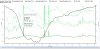
Below you can see that sensor 1 is really high but reacts very similar to the other sensors.
Even up to 2,5 it has the same linearity as the others.

I have 1 extra oxygen MAV (plugged, no orifice) on my KISS Classic.
It is used to spray oxygen directly on the sensors.
At depth a 2,5 spike can be produced anytime to check the sensors linearity.
(or at least reveal dangerous linearity problems)
After 15 seconds the tiny oxygen cloud is diluted when breathing out.
The resulting PPO2 is nearly unaffected.
Regards
Sven Becker

Sensor_1_high_mV.jpeg
 
Depends what mv it reads at 1.0.


***********************************************************************
NOTE! THIS POST HAS BEEN CORRECTED IN POST 15
***********************************************************************


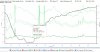
Jeff -here is a picture showing sensor 1(75mv), 2(48mv), 3(45mv) at 1.0 PPO2 during the dive:

Sensor1_at_1.0_PPO2.jpg
 
Last edited:
sensor 1 is scary high, sensor 3 is lower than I would prefer, both would be on my watch list.

But more importantly, you need a the excel spreadsheet to see how linear they graph. in increments of PPO.

Are these AI, or vandy cells?

an example...https://www.flickr.com/photos/63577249@N06/13289565413/in/dateposted-public/

1:
I have used sensors from 7mV up to 14,6 mV in air during my 1200 hours and I have not seen any problem that I
can relate to that.

2:
Narked@90 cells (vandy?)
Very stable cells. This particular cell is the only "near boarder" I have noticed.
Still it worked perfectly until I replaced it after 1 year.

3:
I don't need a spread sheet.
I don't use a cell checker.
I verify my sensors many times during each dive and after the dive I use CCR tools
which is a wonderful tool to evaluate sensor behaviour in the real world!

Since I have the ability to spike PPO2 (see reply above), CCR tools can show the linearity far beyond 1.6.
The amount of samples beyond 1.6 for an dive may not be big enough to to show a perfect linearity though.

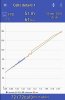
Here is a graph produced in CCR Tools on my android showing the linearity for sensor1 for the same dive.
As you can see the linearity is really perfect below 1,4.

Regards
Sven Becker


ccrtools_sensor1.jpg
 
Something is really not right about 75mV at 1.0
Unless that is a completely different cell with its own range I don't think I would be diving that. And 45 is low.

What is the age and brand of these cells?
 
why bother richard, he already knows it all.. They are vandagraphs, So you know as well as I do what they should be at 1.0
 
Yea I see that now.
75mV is crazy, max mV at 1.0 should be about 63.
Cell 1 probably has a perforated membrane.

The 45 I would use if it were linear. But I don't go around spiking to 2.5 and to claim that any cell is linear this far out of its calibrated range is pure folly.
 
Something is really not right about 75mV at 1.0
Unless that is a completely different cell with its own range I don't think I would be diving that. And 45 is low.

What is the age and brand of these cells?

Sorry for the delayed answer (night in Sweden)

Here is the link to the sensor spec I use for the last couple of years:
http://www.narkedat90.com/v/vspfiles/downloadables/Molex-Oxygen-Sensor-Specs.pdf
As you can see PPO2 in air is 9-13mV

None of the sensors were used more than 12 months.
When replacing them after 12 months, none of them were older than 15 months from the manufacturing date.
 
Yea I see that now.
75mV is crazy, max mV at 1.0 should be about 63.
Cell 1 probably has a perforated membrane.

The 45 I would use if it were linear. But I don't go around spiking to 2.5 and to claim that any cell is linear this far out of its calibrated range is pure folly.

I consider cell 2 and 3 as quite normal when evaluating them during and after each dive.

Let's talk about the scary 14.6 mV cell 1.
My first reaction was to return it but my curiosity took control.
I used it for 120 dives during 12 months.
The mV values has been stable all the time. Variations size not more than you can see before/after dive.
The linearity below 1,8 has been excellent during all 120 dives.
(see CCRtools graph above. I could add 119 more graphs from the other dives but I don't think the forum owner likes that ; )

The linearity above 1.8 up to 2 - 2.5 has been reasonably good given the small number of "snapshots" the Petrel manages to produce
during the spike time.
(Phase 1:about 0.01L oxygen sprayed into the sensor chamber - spike on top after about 7 seconds)
(Phase 2: 4L exhalation is mixed with the 0.01L in the inhalation CL - spike on bottom after about 7 seconds. Original PPO2 hardly affected)

I don't think a cell with a perforated membrane could have performed so nicely (?)

Regards
Sven Becker
 
The fact remains that 14.6 is above specification and thus 75mV is also out of specification and 7% higher than it should be for the starting voltage (i.e. expected is 69 mV). The most plausible explanation is a perforated membrane, but perhaps the circuitry is erroneous or some other manufacturing defect. You were diving a defective sensor that shouldn't have been shipped regardless of your on the fly testing.

You got away with it - this time. This is a textbook example of what, in accident analysis, we end up calling the normalization of deviance. (eg https://decodoppler.wordpress.com/2015/03/04/normalization-of-deviance/ ) Some of us are calling you out on it before anything bad happens and you are defensive. Think about that for a bit.
 
NOTE! Post 6 should be corrected.
When checking the Shearwater graph, O2 is shown with only 1 decimal resulting in a doll figure for sensor mV at 1.0.
So Post 6 probably shows the figure 75mV at 1.09 (very near 1.1)
Below I also show the figure 70mV at 1.00 (very near 0,9)

75mVcorrected.jpg
 
The fact remains that 14.6 is above specification and thus 75mV is also out of specification and 7% higher than it should be for the starting voltage (i.e. expected is 69 mV). The most plausible explanation is a perforated membrane, but perhaps the circuitry is erroneous or some other manufacturing defect. You were diving a defective sensor that shouldn't have been shipped regardless of your on the fly testing.

You got away with it - this time. This is a textbook example of what, in accident analysis, we end up calling the normalization of deviance. (eg https://decodoppler.wordpress.com/2015/03/04/normalization-of-deviance/ ) Some of us are calling you out on it before anything bad happens and you are defensive. Think about that for a bit.


Rjack - I fully respect your taken position regarding cells out of limit and if you advice MaxGuru to demand a replacement of the cell I can agree.

However - I disagree with your security conclusions above regarding the cell we are talking about.
I have not walked through a minefield without knowing the danger but just looked at it through the fence.


I ALWAYS treat ALL sensors (and to some extent dive electronics) as being defective and dangerous.
Each minute during the dive.

That's why I :

-not use a cellchecker (only historic data - not real time data)

-carefully check the Petrel data shown by CCRtools for each sensor after each dive

-use a N.E.R.D enabling easy continuous realtime check of the PPO2 values
-also use a Petrel as online backup

-replace cell/computer cables about every 4 year(400hours).
(3 times since 2004)


-have added the extra MAV for spiking the cells anytime
with a small/safe amount of oxygen to check for
current limited cells.
Used about 3-5 times/dive.


-have added a diluent MAV for spraying the sensors with EAN50, air or 15/55 depending on depth
to verify the sensors against those known gases
Used about 3-5 times/dive.


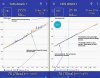
The cell has behaved flawlessly during 120 dives, 12 months.

In fact, I have difficulties finding another cell with such good stability and linearity in my saved data.

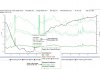
Below (for the last time - I promise) I have added CCRtool graphs for dive 2 and dive 120.

The 2 graphs are almost identical!
Sensor1 1 year.jpg
 
Back
Top