My DCS Hit

Status
Not open for further replies.
I want to post this separately so it does not get lost in the noise, and as an illustration of the ridiculous nature of the entire interaction with Ross on this thread.

Lets say there are two approaches to decompression: A and B. The best available data suggests that the rate of DCS when A is used is 1% and the rate of DCS with B is 2% (these numbers are just illustrative). Putting that another way, DCS is sometimes going to occur when both approaches are used, but slightly more so with B than A. Despite the inevitability of some cases DCS occurring with both approaches, a proponent of B highlights a single case of DCS that occurred using A and claims that this proves B is better, even though the best available data from proper studies demonstrate it is not.

Its as simple as that: an utterly fatuous argument. Except its even worse in the specific case discussed in this thread because (continuing with the example above) approach A was not even followed properly.

Simon M
 
I want to post this separately so it does not get lost in the noise, and as an illustration of the ridiculous nature of the entire interaction with Ross on this thread.

Lets say there are two approaches to decompression: A and B. The best available data suggests that the rate of DCS when A is used is 1% and the rate of DCS with B is 2% (these numbers are just illustrative). Putting that another way, DCS is sometimes going to occur when both approaches are used, but slightly more so with B than A. Despite the inevitability of some cases DCS occurring with both approaches, a proponent of B highlights a single case of DCS that occurred using A and claims that this proves B is better, even though the best available data from proper studies demonstrate it is not.

Its as simple as that: an utterly fatuous argument. Except its even worse in the specific case discussed in this thread because (continuing with the example above) approach A was not even followed properly.

Simon M


The best available data says NOTHING about B..... Your favorite test compares two versions of A.... Its people like you with your defective and unscientific interpretations, who have talked yourselves into this false A / B comparison.... When you subsequently derived C, based on a false interpretation B, then your new C fails because it was founded on a false premise.

It will happen again Simon. You only have yourself to blame for your failed C.
.
 

This is like moaning that exams are unfair because they deliberately favour students who have studied harder.

Simon M

Simon, this really made me laugh!

Ross, It's time to actually start providing some useful data to back up your claims of "junk science". Otherwise, it is just junior high school name calling and whining. Simon has graciously taken the time to carefully answer and correct what he considers to be misinformation. His in depth explanations are appreciated and useful to the CCR community. Whether you agree with his analysis or not, you either need to provide some evidence to the contrary or stop whining about it. Quite honestly, it is becoming a bit tedious to read your same comments over and over. Just like everyone else here on CCRX, you are entitled to share your opinions, but if you insist on continuing to shout "junk science", please do us all a favor and explain exactly why it is so.
 
It will happen again Simon. You only have yourself to blame for your failed C.
.

Read my post. Of course it will happen again. Even IF someone actually does exactly what I think is optimal (which they didn't on this occasion). The question is, if you did a trial of VPM-B vs a GF approach which actually followed the path we think is closer to optimal, with many repetitions, which approach would produce a greater rate of DCS? Based on UWSojourners analysis, we can see the likely answer. You simply don't understand the concept of relative risk or what it would take to measure it.

And since you are still hammering the blame theme, I and others are still waiting for the answer to this:

Based on this blame angle you are pushing, do you now accept blame for all divers previously injured using all forms of deep stops, and any who may be injured using these approaches in the future?

Simon M
 
Last edited:
Simon has graciously taken the time to carefully answer and correct what he considers to be misinformation

Randy, thank you. I just want to recognise that UWSojourner has made a pivotal contribution by providing strong evidence that a key problem with Don's decompression was the ascent rate, and that a VPM-B decompression from the same dive produces much more supersaturation than GF decompressions of the same duration.

Simon
 
This has been very insightful and helpful and kudos to Don for his openness.

I am a born again diver, bowing out first time around in the late 90s when so called Pyle Stops were gaining credibility, and I also seem to remember a DAN study that also found a correlation between a short pause between bottom and safety and lower surface SS and bubble scores.

Am I right in thinking that in really simple terms some form of "early" stop, so long as you compensate the slower tissues in the shallows is still beneficial for the faster tissues?

In really simplistic terms did the whole deep stop concept get derailed by a couple of factors:

1. Human nature, thinking if a bit is good for you a lot must be better resulting in 20/80 type GF profiles for example.

2. Bubble model underlying beliefs that if the bubbles were prevented from reaching critical volumes/size through deeper stops, less shallow time was required leading to 20/130 type GF profiles.

I only use GF's to illustrate the point and the numbers are purely hypothetical and I don't know enough about VPM or similar to indicate what I mean.

So I guess I am stating the obvious, but so long as whichever algorithm you choose, provided it allows for some consideration of the fast and the slow tissues, and neither are significantly more aggressive than the other, you should be OK.

I think this is correct, my nagging doubt that I wanted to clarify was again simplistically, that part of the bubble model science is right and part of the dissolved gas model science is right, we as individuals have to self validate and find where the lines are on each side of the physiology.

Woolly at best, but that's just how deco is as I see it.

Also I thought RGBM which I believe predated Buhlmann GF was developed to cover both ends of the deco spectrum (formation/solution), what precluded it from being more successful or popular?

Obviously my points above are not related to the "extreme" depth or duration profiles, but may suffice for the average weekend diver?
 
Simon, this really made me laugh!

Ross, It's time to actually start providing some useful data to back up your claims of "junk science". Otherwise, it is just junior high school name calling and whining. Simon has graciously taken the time to carefully answer and correct what he considers to be misinformation. His in depth explanations are appreciated and useful to the CCR community. Whether you agree with his analysis or not, you either need to provide some evidence to the contrary or stop whining about it. Quite honestly, it is becoming a bit tedious to read your same comments over and over. Just like everyone else here on CCRX, you are entitled to share your opinions, but if you insist on continuing to shout "junk science", please do us all a favor and explain exactly why it is so.


Hi Randy,

I think you have this situation back to front. The burden of proof is with them.

It is Kevin's / Simon's made up ISS formula being discussed. He has shown nothing to verify its a legitimate measure. Nothing to verify its a useful measure. Nothing to show it gives honest information. They make claims about its connection to stress and risk, all of which are unsubstantiated, biased, and wrong.

Then Simon pretends its is OK because he implies it has some connection to a nedu measure, (which it does not) .

See what I mean Randy? Its their job to show us the validity of their claim.... which they have not done.


Some old Kevin Watts / Simon Mitchell con trick. Make some pretty marketing graph, with no real value, and con the public into a false premise.


***************


Look at his denial about this failed dive example in Don's dive. The worlds most self appointed medical decompression expert, can't face up to the fact that his "new, more efficient" deco method, does not work on deeper dives, simply because it exceeds the bounds of human tolerance of bubble growth.

He pushed the world into his new direction, but wants to avoid any connection to the failures caused by that change. Instead he is trying to hide behind yet another phony attack on VPM-B distraction.

.
 
Last edited:
Ummmm..... @rossh.... how many times does it need to be pointed out, and by how many people, that Don’s dive didn’t conform to the strategy that Simon has suggested might reduced decompression stress upon surfacing? Even Don, himself, said that he wasn’t attempting to emulate Simon’s strategy. With that said, if you’re going to attempt to pin the blame for Don’s hit on Simon, you’re going to need to raise your level of your evidentiary argument, because all of the other participants seem to agree that Don’s dive plan and Simon’s strategy are two completely separate and unrelated things, even if there are some primos fascia resemblances. To be honest, from my perspective, it’s time for you to cut bait and let this one go.

ATB
 
Ummmm..... @rossh.... how many times does it need to be pointed out, and by how many people, that Don’s dive didn’t conform to the strategy that Simon has suggested might reduced decompression stress upon surfacing? Even Don, himself, said that he wasn’t attempting to emulate Simon’s strategy. With that said, if you’re going to attempt to pin the blame for Don’s hit on Simon, you’re going to need to raise your level of your evidentiary argument, because all of the other participants seem to agree that Don’s dive plan and Simon’s strategy are two completely separate and unrelated things, even if there are some primos fascia resemblances. To be honest, from my perspective, it’s time for you to cut bait and let this one go.

ATB

The quintessential component of Simon Mitchell's "new, more efficient" deco method, is the reduction / removal / elimination of deeper stops. Don's 60/x dive included exactly that change. Compared to all we have on record, Don's dive is unique for its GF 60/x and the first of its kind in many many years. It failed, and did so even before he reached the shallow stops. That's pretty damning evidence against the changes Simon is advocating. In post #33, I showed using scientific measures, why that injury occurred.

.
 
The burden of proof is with them.

It is Kevin's / Simon's made up ISS formula being discussed. He has shown nothing to verify its a legitimate measure. Nothing to verify its a useful measure. Nothing to show it gives honest information. They make claims about its connection to stress and risk, all of which are unsubstantiated, biased, and wrong.

Then Simon pretends its is OK because he implies it has some connection to a nedu measure, (which it does not) .

See what I mean Randy?

One of the enduring mysteries of decompression is how many world-renowned decompression scientists have to correct Ross before he considers the burden of proof to have been met. [sigh]

See this post by Dr. Doolette.

And this post by Dr. Doolette.

"You [Ross] are completely misrepresenting the use of, and the utility of, the summed integral supersaturation as a measure of decompression stress."

"The time integral supersaturation is used as an index of decompression stress because both the magnitude and the duration of supersaturation are important."

"It is true that the raw integral supersaturation is not calibrated, but this does not detract from it's utility for comparing similar profiles, such as Kevin has done here, or I did in NEDU TR 11-06."
 
One of the enduring mysteries of decompression is how many world-renowned decompression scientists have to correct Ross before he considers the burden of proof to have been met. [sigh]

See this post by Dr. Doolette.

And this post by Dr. Doolette.
"

From post 57:
To be honest most of us on this forum and others (RBW) have witnessed Ross's contributions on this topic over the years, most of us attempted to politely show him where he erred in his analysis but we were all wrong, the leading scientists in this area e.g. Doolette and Mitchell attempted to explain to him and guess what they were wrong as well. We all were met with his confirmation bias that he was right no matter what. So now most of us sadly have become exasperated and ignore whatever he posts.
 
One of the enduring mysteries of decompression is how many world-renowned decompression scientists have to correct Ross before he considers the burden of proof to have been met. [sigh]

See this post by Dr. Doolette.

And this post by Dr. Doolette.

"You [Ross] are completely misrepresenting the use of, and the utility of, the summed integral supersaturation as a measure of decompression stress."

"The time integral supersaturation is used as an index of decompression stress because both the magnitude and the duration of supersaturation are important."

"It is true that the raw integral supersaturation is not calibrated, but this does not detract from it's utility for comparing similar profiles, such as Kevin has done here, or I did in NEDU TR 11-06."


Except... neither of those comments by David, about the NEDU pDCS method, have relevance to YOUR method. Your method is new, and you have made claims about risk and stress that you cannot justify.


You and Simon, are trying to bypass proper process, by pretending some (non-existent) association to a Nedu test process, and then give yourself a free license to make shit up.


If I tried that same BS, you lot would fry me in oil.

.
 
Last edited:
Except... neither of those comments by David ... have relevance to YOUR method. Your method is new, and you have made claims about risk and stress that you cannot justify.

Clearly Dr. Doolette does not agree with you. He specifically tied the ISS measure I'm using to the same measure he used in NEDU TR 11-06. And then he specifically called you out for misrepresenting it's usefulness (as you continue to do).

Dr. Doolette:
"It is true that the raw integral supersaturation is not calibrated, but this does not detract from it's utility for comparing similar profiles, such as Kevin has done here, or I did in NEDU TR 11-06."

See this post by Dr. Doolette.
And this post by Dr. Doolette.

"You [Ross] are completely misrepresenting the use of, and the utility of, the summed integral supersaturation as a measure of decompression stress."

"The time integral supersaturation is used as an index of decompression stress because both the magnitude and the duration of supersaturation are important."

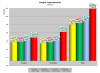
As a reminder, this chart and the dive were discussed here.
C4_2_ISS.png
 
Last edited:
is there an ignore function here?
ross bs gets old..

hero of fake news and alternative facts though..
really sad is the arguments to dispose all the ‘other’ present and very likely important factors than shallow stops..
pretty reckless approach to saftey and health of human beings..

but we have been there before..
 
Clearly Dr. Doolette does not agree with you. He specifically tied the ISS measure I'm using to the same measure he used in NEDU TR 11-06. And then he specifically called you out for misrepresenting it's usefulness (as you continue to do).

Dr. Doolette:
"It is true that the raw integral supersaturation is not calibrated, but this does not detract from it's utility for comparing similar profiles, such as Kevin has done here, or I did in NEDU TR 11-06."

See this post by Dr. Doolette.
And this post by Dr. Doolette.

"You [Ross] are completely misrepresenting the use of, and the utility of, the summed integral supersaturation as a measure of decompression stress."

"The time integral supersaturation is used as an index of decompression stress because both the magnitude and the duration of supersaturation are important."

As a reminder, this chart and the dive were discussed here.
View attachment 10068

Proving to us once again.....

You cannot justify what is in your bar chart, or if it actually means anything. Its just eye candy to trick the unsuspecting user with.

Of course you know that is what your doing here, so why are you peddling this junk science?

.
 
The quintessential component of Simon Mitchell's "new, more efficient" deco method, is the reduction / removal / elimination of deeper stops.

As someone else pointed out earlier in this thread, this is what I had to say on the matter on another forum recently:

So, the existing human evidence collectively constitutes a clear signal that bubble models and other paradigms that promote deep stops have almost certainly over-emphasised them. That does not mean bubble models don’t work, or that you should not use them. Indeed, if you have been using a bubble model successfully, then maybe it is best if you stick with it. But if we seek the “truth in the universe” about optimal decompression, it is almost certain that bubble models prescribe deep stops that are too deep. I do not pretend to have a means of predicting optimal depth for first stops. That is why we have recommended divers attempting to de-emphasise deep stops do so in a cautious and measured way

Reduction? Yep, OK. Removal? Elimination? It seems that you are the one fabricating things Ross.

Don's 60/x dive included exactly that change.

Exactly what change? Every time I have been pressed for my personal preferences I have settled on something like 50:70 and nowhere do I suggest that we should double the recommended ascent rate to the first stop. As we have seen on this thread, just fixing that would have brought Don's fast tissue supersaturation back into more familiar territory. It is patently false for you to claim that Don's decompression was "exactly" anything I have advocated.

Compared to all we have on record, Don's dive is unique for its GF 60/x and the first of its kind in many many years.

I've got a newsflash for you Ross. You are not at the centre of the technical diving universe. How on earth would you know what is going on out there? You would be amazed how much extremely deep diving (including caves) is going on in places like Europe (particularly eastern Europe).

Simon
 
Proving to us once again.....

You cannot justify what is in your bar chart, or if it actually means anything. Its just eye candy to trick the unsuspecting user with.

Of course you know that is what your doing here, so why are you peddling this junk science?

.

Ross,

Simple question, which bit of Dr Doolette's post....

"It is true that the raw integral supersaturation is not calibrated, but this does not detract from it's utility for comparing similar profiles, such as Kevin has done here, or I did in NEDU TR 11-06."

...do you not understand?

Simon M
 
Ross,

Simple question, which bit of Dr Doolette's post....

"It is true that the raw integral supersaturation is not calibrated, but this does not detract from it's utility for comparing similar profiles, such as Kevin has done here, or I did in NEDU TR 11-06."

...do you not understand?

Simon M


I understand.... Now YOU have to define what "..it's utility..." actually means, using a proper scientific reference, validated data, or similar verifiable dimensions.

Further more, you and Kevin are attempting to piggy back your home made version, on the back of the Nedu pDCS version, based solely on some imaginary association..

Because right now.. all you do is generate meaningless bar graphs to con the public with. i.e. junk science.


.
 
Last edited:
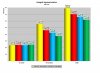
Dr. Doolette said, "It's utility for comparing similar profiles, such as Kevin has done here." The profiles being compared in that discussion are here. The chart you objected to, but Dr. Doolette affirmed as a valid use of ISS is shown below.
View attachment 10069


So you cannot justify your home made version, or explain it through any valid science. But you know how to keep posting junk science bar charts, that you know full well is junk science.

Makes us wonder who is paying you to keep pumping out this propaganda..,
 
Status
Not open for further replies.
Back
Top