
Sven Becker
Member
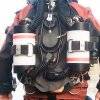
The name OAK.
Seems perhaps to be a cocky name... Thats good! Probably this forum will wake up!!!
But my interpretation is "only one ex. of this kind".
I built it for myself to use. I have no intention at all to earn money on my sport - just enjoy it.
So if you find any useful ideas - just pick them up.
Background.
Since 2004 I have really enjoyed diving my KISS Classic 1200 hours.
2018 I decided to build a rebreather close to the KISS brand ideas and adding own ideas matured
during 14 years.
Since Jan 2019 I have been diving my OAK rebreather. 14 months - 130 hours - max depth 75m so far.
Parts and suppliers.
Me
My native tools are chainsaw, axe and som other things…
Only the 2 backbones behind the canisters has been produced by myself.
TecMe.de Martin Tolksdorf
All details you cannot identify in my pics and film has been produced by Martin!!!
Just check his home page.
KISS
The complete loop is ”shared” with my KISS Classic.
Shearwater (what else?)
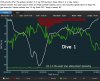
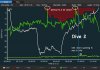
Petrel 2 reading 3 O2 sensors traditionally placed at the inhale side.
Reacts late and slow on gas addition.
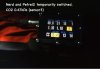
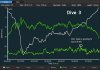
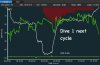
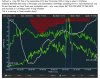
NERD reading 2 O2 sensors and 1 CO2 sensor in the counterlung between the 2 canisters.
The sensors are placed 20 mm from the O2 and DIL inlets and reacts rapidly on minimum gas puffs.
Is used to verify DIL gas choice and check for current limited sensors.
The computers are totally independent using their own sensors. No resistor net needed!
Can switch a computer cable using a wrench.
Hollis
I use a SMS75 as platform. (also currently rebuilding my KISS C on a new SMS75)
Narked@90
Omniswivel and Swagelok gas management parts
Miflex hoses (because they provide almost any length)
A few self made hoses with special lengths
GolemGear
Shrink BOV
https://www.dynament.com/products/gas-sensors/premier-non-ex-sensors/
CO2 sensor
order spec:
Premier CO2 sensor
MSH2-LP/CO2/NC/5/V/P/F
0 - 5% Volume CO2 = out 0.1V to 2.0V
Rising V while increasing gas level
Manual calibration using Minus, RX, TX
Normal Temp range
comm speed normal (will not be used)
over range value 200% (default) of full scale value
I recalibrated this sensor to 0-2%
I may buy another initially calibrated to this value.
Also the 1 minute startup value can be choosen.
I may order that next time….
It concerns easier adaption CO2 sensor/Shearwater computer
My own extra features/thoughts that ”forced” me to make my own rebreather.
Straight loop
No vicious o-ring of death. I only use honest o-rings. Either they leak water into the loop or
gas into the water - easy to detect.
(The flapper valves may be seen as vicious - will replace them often)
double canister, single intermediate CL.
At each single moment, the WOB is only affected by half of the sorb.
CO2 can be measured after the exhale canister. When the CO2 rises, the (inhale canister)
sorb spare time is nearly 2 hours.
As a side effect, the sorb is efficiently used since only the burned sorb is dumped.
Easy to handle water trap/dump capabilities
Look at the Water/Saliva Disposer in the film. Used it 1000+ hours. Also used on two more RBs.
Look at the exhale canister/OPV water dump capability in the film.
Inhale hose water trap
The inhale hose female p-port is longer than normal and sticks into the sensor lid towards the center.
If in head down position, small amounts of water in the inhale canister cannot pass into the inhale hose.
Gas check before use after switching gas.
"Puff and read”
As clean back as possible - As light rebr. as possible - low back profile, about +10cm
All tanks sidemounted
Going SCR
All DIL tanks possible to use to feed the needle valve.
Truly independent computers.
No sensors sharing.
Counterlung balancing weight.
In near horizontal position (5 degr.), the CL pressure is completely neutral. When slowly filled, the gas
is first concentrated in the lower part.
In vertical position, the weight doesn't affect the CL. The gas is filled from the top part.
Hope this leads to a informative discussion. Perhaps I even modify my precious…..
”I never make mistakes. Once I thought I did but I was wrong”
Regards
Sven Becker
The youtube film:
https://youtu.be/EvLVwj76D3U
Seems perhaps to be a cocky name... Thats good! Probably this forum will wake up!!!
But my interpretation is "only one ex. of this kind".
I built it for myself to use. I have no intention at all to earn money on my sport - just enjoy it.
So if you find any useful ideas - just pick them up.
Background.
Since 2004 I have really enjoyed diving my KISS Classic 1200 hours.
2018 I decided to build a rebreather close to the KISS brand ideas and adding own ideas matured
during 14 years.
Since Jan 2019 I have been diving my OAK rebreather. 14 months - 130 hours - max depth 75m so far.
Parts and suppliers.
Me
My native tools are chainsaw, axe and som other things…
Only the 2 backbones behind the canisters has been produced by myself.
TecMe.de Martin Tolksdorf
All details you cannot identify in my pics and film has been produced by Martin!!!
Just check his home page.
KISS
The complete loop is ”shared” with my KISS Classic.
Shearwater (what else?)
Petrel 2 reading 3 O2 sensors traditionally placed at the inhale side.
Reacts late and slow on gas addition.
NERD reading 2 O2 sensors and 1 CO2 sensor in the counterlung between the 2 canisters.
The sensors are placed 20 mm from the O2 and DIL inlets and reacts rapidly on minimum gas puffs.
Is used to verify DIL gas choice and check for current limited sensors.
The computers are totally independent using their own sensors. No resistor net needed!
Can switch a computer cable using a wrench.
Hollis
I use a SMS75 as platform. (also currently rebuilding my KISS C on a new SMS75)
Narked@90
Omniswivel and Swagelok gas management parts
Miflex hoses (because they provide almost any length)
A few self made hoses with special lengths
GolemGear
Shrink BOV
https://www.dynament.com/products/gas-sensors/premier-non-ex-sensors/
CO2 sensor
order spec:
Premier CO2 sensor
MSH2-LP/CO2/NC/5/V/P/F
0 - 5% Volume CO2 = out 0.1V to 2.0V
Rising V while increasing gas level
Manual calibration using Minus, RX, TX
Normal Temp range
comm speed normal (will not be used)
over range value 200% (default) of full scale value
I recalibrated this sensor to 0-2%
I may buy another initially calibrated to this value.
Also the 1 minute startup value can be choosen.
I may order that next time….
It concerns easier adaption CO2 sensor/Shearwater computer
My own extra features/thoughts that ”forced” me to make my own rebreather.
Straight loop
No vicious o-ring of death. I only use honest o-rings. Either they leak water into the loop or
gas into the water - easy to detect.
(The flapper valves may be seen as vicious - will replace them often)
double canister, single intermediate CL.
At each single moment, the WOB is only affected by half of the sorb.
CO2 can be measured after the exhale canister. When the CO2 rises, the (inhale canister)
sorb spare time is nearly 2 hours.
As a side effect, the sorb is efficiently used since only the burned sorb is dumped.
Easy to handle water trap/dump capabilities
Look at the Water/Saliva Disposer in the film. Used it 1000+ hours. Also used on two more RBs.
Look at the exhale canister/OPV water dump capability in the film.
Inhale hose water trap
The inhale hose female p-port is longer than normal and sticks into the sensor lid towards the center.
If in head down position, small amounts of water in the inhale canister cannot pass into the inhale hose.
Gas check before use after switching gas.
"Puff and read”
As clean back as possible - As light rebr. as possible - low back profile, about +10cm
All tanks sidemounted
Going SCR
All DIL tanks possible to use to feed the needle valve.
Truly independent computers.
No sensors sharing.
Counterlung balancing weight.
In near horizontal position (5 degr.), the CL pressure is completely neutral. When slowly filled, the gas
is first concentrated in the lower part.
In vertical position, the weight doesn't affect the CL. The gas is filled from the top part.
Hope this leads to a informative discussion. Perhaps I even modify my precious…..
”I never make mistakes. Once I thought I did but I was wrong”
Regards
Sven Becker
The youtube film:
https://youtu.be/EvLVwj76D3U
Last edited: