

Mattp
New Member
In recent years we have seen a lot of changes in the world of rebreathers several units targeted at sport divers hitting the market and quite a few models aimed at the technical diver used to push the limits of cave and wreck exploration. At this point in time I am afraid that training and dive procedures evolved over the last two decades may become diluted. In this post I will overview my general thoughts on team diving with CCR for decompression and overhead environments along with my configuration thoughts, specifically developed procedures used will not be included at this time.
A brief history
In the summer of 2005, I had been looking into getting a PSC-Rebreather for cave diving but due to the fact that I had 5 closed circuit rebreathers at the time for training and personal diving I decided to customize a Megalodon CCR, making a hybrid manual, electronic and passive SCR latter switching to the JJ-CCR for its simplicity. I set a goal to implement a standard configuration and set of procedures for diving rebreather in challenging technical environments.
Standardized diving practices bring clear benefits to advanced level diving keeping teams in sync with gear, simplifying dive planning and managing emergencies along with sharing a common dive objective to enjoy, succeed and have rewarding dives, I had been involved in several projects involving deep dives on CCR, during those projects the team was unable to agree in dive practices, gas management and shared differing opinions on how to deal with emergencies thus resulting in unsuccessful dives and dangerous mission planning.
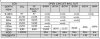
The first step was to look at implementing dive planning and procedures that I felt would streamline CCR diving that began with standardizing gases, they were adapted GUE standard gases as I believe in the diving a END of 30m in overhead environments but Maximum operating depths needed revising due to the rebreather diver requiring the ability to conduct cell verification checks at depths, all MOD’S were set around 1.0ppo2 at target depth. Bailout gases were then a consideration, conventional max PPO2 were considered to be ok and the following gases in table 1 were put into place.
It was then need to develop a standard method for covering the other dive planning consideration and as rebreather diving seemed to be somewhat an art it was developed around the acronym MONA LISA as highlighted below. This enabled the team to cover most aspects of the dive prior to gearing up ensure each team member was clear on the objectives, plans, roles and responsibility’s and dive execution the final apparatus check is conducted prior to diving following a head-to-toe check, verification of system operation and function along with itemized equipment enable the team to be relaxed at the beginning of the dive that all is setup and functioning prior to entry. It worth mentioning that we still complete the manufactures pre-checklist and the MONA LISA is not a substitute for them in anyway.
MONA LISA***8232;
M - mission
Dive Objective
O -Organization
Define the roles in the team
N - Navigation
Direction / Survey
A – Ascent Profile
Depth & Time & Deco / Bailout
L - Linearity Check
Decent & Depth
I- Inert gas mixture
Standard Gases
S - Set-point
Decent & Depth & Ascent
A- Apparatus
Head to toe check
So with all the preparation and planning organized and streamlined we now need to consider standard diving practices as it is only the goal to overview them in brief in this article.I have since produced a detailed set of SOP for team diving and rebreather use. They consider team communication, In-water safety checks/decent checks, bottom phase considerations, normal ascents procedures along with operation and standard skills for dealing with unit failures and emergencies, decompression techniques and diving CCR in overhead environments.
Basic skills like loop volume management, SMB deployment, buoyancy and trim are not covered in the standards and procedures document as there are covered in basic factory training.
CCR Standard diving practices:
1. Head –to Toe checks & In water safety drill
2. Decent techniques & Set-point switching as a team
3. Ascent techniques on CCR
4. When to Bail out to open circuit
5. Delivery of gas to out of gas diver
6. Cell linearity checks during the dive
7. Dealing with a High level of inspired oxygen
8. Low oxygen / no oxygen
9. Low diluent / no diluent
10. When to Manual fly the rebreather
11. Rebreather Rescue techniques for unconscious divers and divers suffering Hypercapnia with mandatory decompression stops
Phase two was to develop a standardized TX Decompression Diver Skill Set:
1. Normal ascent procedures for decompression on CCR
2. Open circuit Bailout decompression
3. OC gas switching procedure
4. Unknown gas failures Fixable or none fixable failures (Boom! Drills)
5. Dealing with lost gases / No o2 liner swims and initial ascents
6. Off-board pluggable gas addition,
7. Dealing with failed Monitoring systems
8. Multiple Stage/Decompression bottle management
9. CCR Flood recovery Options
10. Semi closed Rebreather operation
11. Lost bailout gas procedure, a Pragmatic approach to bailout CCR deco
12. What if’s, General equipment failures and problems
Phase three was to further consideration diving practices and emergencies in Overhead environments specific to caves. Obviously their are a number of already accepted decompression and cave diving skills the rebreather diver needs to understand to managing the CCR in technical and overhead environments these skills also need to be covered.
All the above skills sets have key steps to ensure success in diving operations and requires each team member to fully understand each component of the skills along with being able to effectively communicate with each other as their status during the dive and support document was then produced to standardize team rebreather communication.
With such a large skills set and possible problems during a complicated dive it became clear that we needed to consider a few addition concepts as standard practice the most important being “if in doubt bailout “ go to open circuit and stay out until such a time that the diver can think reasonable to what has gone on and can they fix the problem this reduces the task loading in trying to manage complicated drills in complicated environments, it requires the team to be clear with a full OC bailout drill and gas management procedures to end the dive safely. It was with this in mind that that I took the approach the rebreather works as it should or not and bailout to OC and end the dive.
The second was that the team needed to regularly practice the drills and maintain a dived up status to ensure proficiency and competency in executing the dives and managing the emergencies a team may face at this level of diving. I am personally lucky enough to teach courses on a regular basis at all levels of CCR and see that often divers lack good communication, situational awareness and general dive practice as they simply don’t have enough buddies or diving time to practice resulting in divers who may only get the chance to do skills and drills on a 5 day training class, and this is not enough. Divers are often paralyzed by the multiple skills they learn thinking they can plug this to that, flush the loop here and their, switch this to that and end up making a cluster of it all solving nothing and compounding problems at depth, this requires a clear breakdown of when, were and how skills should be executed and practiced until mastery is achieved.
To date no one as completely standardized rebreather diving and I don’t believe they ever will but I am sure that teams / divers must agree on an effective well thought out systematic approaches to rebreather diving to ensure diver safely and make the whole thing a more manageable activity and hopefully resulting in fewer accidents within the community.
Configurations and system design
It was clear in my mind that I liked the idea of large volume gases used in open circuit profiles and PSCR dives combined with my standard open circuit configuration keeping things flowing for all level dives following the DIR principles I had been introduced to in my GUE tech training. That summer I had done a lot of open circuit diving and really enjoyed its simplicity again so decided to revisit my skills set for CCR, In order to simplify my skills set I had to consider my equipment setup.
The result was a list of unit specific considerations that would set the foundation for my system design.
• The unit should allow for large volume On-board bailout gas supply cylinder to be fitted, not necessarily all diluent on-board but supports the idea a diver can pass off bottom mix to a team member in an emergency and not have to long hose gas share in complex dives..
•The unit should have back mounted counter-lungs to allow for a streamlined profile.
•The CCR should be fitted with a built in bailout valve/ BOV and routed to a cylinder with enough capacity to make a personal bailout without going to a stage unless required due to primary system failure
•The configuration must be equipped with both oxygen and diluent supply manual bypass systems.
•The units should be able to accept off-board pluggable gas incase of primary supply failure.
•The unit should be fitted with a back up system monitor.
•The system should be maintainable without any special tools and should be in the field repairable.
•The unit should have undergone independent testing to validate unit performance.
•The unit should trim out well without the need for lots of additional weight to allow for streamlining in overhead environments.
•The unit should be modular in design and be travel friendly.
The above criteria enables the use of several rigs existing in the market today. My choice was to modify a Megalodon CCR that was costly and un-tested in the configuration I needed, I later switched to the new JJ-CCR as this unit needed little modification was tested and came to the market at a very reasonable price. I have been diving this rig extensively now for the last 2 years and have found it to meet the demands of my diving and has exceeded my original expectations of the gear.
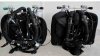
Modified Meg CCR and JJ-CCR
Over the last eight years I have continued to refine the SOP and skills set and have been able to introduce many new CCR divers to the concept of team diving on rebreathers I would like to thank them for their input and thoughts that have evolved this system to what it is now.
If there are other rebreather divers diving in teams and would like to share their protocols and procedures feel free to post.
To those not introduced yet to team diving please remember the concept is holistic and requires full understanding to be effective in use.
As time allows I will share more of the SOP with the CCR explorer community and welcome any comments and suggestions on the above.
Maybe my friend and new owner Randy could open a subsection for team diving and Rebreathers for us to share our thoughts and ideas
All the Best
A brief history
In the summer of 2005, I had been looking into getting a PSC-Rebreather for cave diving but due to the fact that I had 5 closed circuit rebreathers at the time for training and personal diving I decided to customize a Megalodon CCR, making a hybrid manual, electronic and passive SCR latter switching to the JJ-CCR for its simplicity. I set a goal to implement a standard configuration and set of procedures for diving rebreather in challenging technical environments.
Standardized diving practices bring clear benefits to advanced level diving keeping teams in sync with gear, simplifying dive planning and managing emergencies along with sharing a common dive objective to enjoy, succeed and have rewarding dives, I had been involved in several projects involving deep dives on CCR, during those projects the team was unable to agree in dive practices, gas management and shared differing opinions on how to deal with emergencies thus resulting in unsuccessful dives and dangerous mission planning.
The first step was to look at implementing dive planning and procedures that I felt would streamline CCR diving that began with standardizing gases, they were adapted GUE standard gases as I believe in the diving a END of 30m in overhead environments but Maximum operating depths needed revising due to the rebreather diver requiring the ability to conduct cell verification checks at depths, all MOD’S were set around 1.0ppo2 at target depth. Bailout gases were then a consideration, conventional max PPO2 were considered to be ok and the following gases in table 1 were put into place.
It was then need to develop a standard method for covering the other dive planning consideration and as rebreather diving seemed to be somewhat an art it was developed around the acronym MONA LISA as highlighted below. This enabled the team to cover most aspects of the dive prior to gearing up ensure each team member was clear on the objectives, plans, roles and responsibility’s and dive execution the final apparatus check is conducted prior to diving following a head-to-toe check, verification of system operation and function along with itemized equipment enable the team to be relaxed at the beginning of the dive that all is setup and functioning prior to entry. It worth mentioning that we still complete the manufactures pre-checklist and the MONA LISA is not a substitute for them in anyway.
MONA LISA***8232;
M - mission
Dive Objective
O -Organization
Define the roles in the team
N - Navigation
Direction / Survey
A – Ascent Profile
Depth & Time & Deco / Bailout
L - Linearity Check
Decent & Depth
I- Inert gas mixture
Standard Gases
S - Set-point
Decent & Depth & Ascent
A- Apparatus
Head to toe check
So with all the preparation and planning organized and streamlined we now need to consider standard diving practices as it is only the goal to overview them in brief in this article.I have since produced a detailed set of SOP for team diving and rebreather use. They consider team communication, In-water safety checks/decent checks, bottom phase considerations, normal ascents procedures along with operation and standard skills for dealing with unit failures and emergencies, decompression techniques and diving CCR in overhead environments.
Basic skills like loop volume management, SMB deployment, buoyancy and trim are not covered in the standards and procedures document as there are covered in basic factory training.
CCR Standard diving practices:
1. Head –to Toe checks & In water safety drill
2. Decent techniques & Set-point switching as a team
3. Ascent techniques on CCR
4. When to Bail out to open circuit
5. Delivery of gas to out of gas diver
6. Cell linearity checks during the dive
7. Dealing with a High level of inspired oxygen
8. Low oxygen / no oxygen
9. Low diluent / no diluent
10. When to Manual fly the rebreather
11. Rebreather Rescue techniques for unconscious divers and divers suffering Hypercapnia with mandatory decompression stops
Phase two was to develop a standardized TX Decompression Diver Skill Set:
1. Normal ascent procedures for decompression on CCR
2. Open circuit Bailout decompression
3. OC gas switching procedure
4. Unknown gas failures Fixable or none fixable failures (Boom! Drills)
5. Dealing with lost gases / No o2 liner swims and initial ascents
6. Off-board pluggable gas addition,
7. Dealing with failed Monitoring systems
8. Multiple Stage/Decompression bottle management
9. CCR Flood recovery Options
10. Semi closed Rebreather operation
11. Lost bailout gas procedure, a Pragmatic approach to bailout CCR deco
12. What if’s, General equipment failures and problems
Phase three was to further consideration diving practices and emergencies in Overhead environments specific to caves. Obviously their are a number of already accepted decompression and cave diving skills the rebreather diver needs to understand to managing the CCR in technical and overhead environments these skills also need to be covered.
All the above skills sets have key steps to ensure success in diving operations and requires each team member to fully understand each component of the skills along with being able to effectively communicate with each other as their status during the dive and support document was then produced to standardize team rebreather communication.
With such a large skills set and possible problems during a complicated dive it became clear that we needed to consider a few addition concepts as standard practice the most important being “if in doubt bailout “ go to open circuit and stay out until such a time that the diver can think reasonable to what has gone on and can they fix the problem this reduces the task loading in trying to manage complicated drills in complicated environments, it requires the team to be clear with a full OC bailout drill and gas management procedures to end the dive safely. It was with this in mind that that I took the approach the rebreather works as it should or not and bailout to OC and end the dive.
The second was that the team needed to regularly practice the drills and maintain a dived up status to ensure proficiency and competency in executing the dives and managing the emergencies a team may face at this level of diving. I am personally lucky enough to teach courses on a regular basis at all levels of CCR and see that often divers lack good communication, situational awareness and general dive practice as they simply don’t have enough buddies or diving time to practice resulting in divers who may only get the chance to do skills and drills on a 5 day training class, and this is not enough. Divers are often paralyzed by the multiple skills they learn thinking they can plug this to that, flush the loop here and their, switch this to that and end up making a cluster of it all solving nothing and compounding problems at depth, this requires a clear breakdown of when, were and how skills should be executed and practiced until mastery is achieved.
To date no one as completely standardized rebreather diving and I don’t believe they ever will but I am sure that teams / divers must agree on an effective well thought out systematic approaches to rebreather diving to ensure diver safely and make the whole thing a more manageable activity and hopefully resulting in fewer accidents within the community.
Configurations and system design
It was clear in my mind that I liked the idea of large volume gases used in open circuit profiles and PSCR dives combined with my standard open circuit configuration keeping things flowing for all level dives following the DIR principles I had been introduced to in my GUE tech training. That summer I had done a lot of open circuit diving and really enjoyed its simplicity again so decided to revisit my skills set for CCR, In order to simplify my skills set I had to consider my equipment setup.
The result was a list of unit specific considerations that would set the foundation for my system design.
• The unit should allow for large volume On-board bailout gas supply cylinder to be fitted, not necessarily all diluent on-board but supports the idea a diver can pass off bottom mix to a team member in an emergency and not have to long hose gas share in complex dives..
•The unit should have back mounted counter-lungs to allow for a streamlined profile.
•The CCR should be fitted with a built in bailout valve/ BOV and routed to a cylinder with enough capacity to make a personal bailout without going to a stage unless required due to primary system failure
•The configuration must be equipped with both oxygen and diluent supply manual bypass systems.
•The units should be able to accept off-board pluggable gas incase of primary supply failure.
•The unit should be fitted with a back up system monitor.
•The system should be maintainable without any special tools and should be in the field repairable.
•The unit should have undergone independent testing to validate unit performance.
•The unit should trim out well without the need for lots of additional weight to allow for streamlining in overhead environments.
•The unit should be modular in design and be travel friendly.
The above criteria enables the use of several rigs existing in the market today. My choice was to modify a Megalodon CCR that was costly and un-tested in the configuration I needed, I later switched to the new JJ-CCR as this unit needed little modification was tested and came to the market at a very reasonable price. I have been diving this rig extensively now for the last 2 years and have found it to meet the demands of my diving and has exceeded my original expectations of the gear.
Modified Meg CCR and JJ-CCR
Over the last eight years I have continued to refine the SOP and skills set and have been able to introduce many new CCR divers to the concept of team diving on rebreathers I would like to thank them for their input and thoughts that have evolved this system to what it is now.
If there are other rebreather divers diving in teams and would like to share their protocols and procedures feel free to post.
To those not introduced yet to team diving please remember the concept is holistic and requires full understanding to be effective in use.
As time allows I will share more of the SOP with the CCR explorer community and welcome any comments and suggestions on the above.
Maybe my friend and new owner Randy could open a subsection for team diving and Rebreathers for us to share our thoughts and ideas
All the Best


