"re-assessing deco profiles and deep stops", plus other bits..

Is it only with VPM that we end-up with bubbles in the arterial side (laving aside the venous ones for one moment), or this happens with other models as well, with the same or similar or any other frequency?

It is an open question for anybody who has access to data information.

Hi Gian,

not have been made enought tests to know this (we know for now of just this one), but I suspect with all similar profiles is the same.

Sent from my GT-I5800 using Tapatalk 2
 
Simon, if you would read the links I posted, you would see that it is not just Ross position that NEDU deep stop study was not relevant to our diving, but Bruce Wienke and Marv's too. The profiles (BVM3 and VVAL18) were out of proportion for sport diving.

Hello Igor,

Bruce was present at the Deep Stops workshop and, not surprisingly given that he created the RGBM, he is a proponent of deep stops. Nevertheless, he and just about every other relevant expert in the world were part of the consensus group from which emerged the acknowledgement that the evidence in relation to the relative efficacy of deep stop vs non-deep stop profiles is conflicting.

Since you seem very interested in this issue, why don't we consider the issue of relevance of the NEDU study a little more closely.

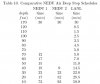
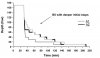
Table 10 (attached below) comes from Bruce Wienke's Deep Stops workshop paper (that is, from Bruce himself). It lists the two NEDU profiles (NEDU 1 = the deep stops profile and NEDU 2 shows the non-deep stops profile) and the RGBM profile (labelled LANL) recommended by Bruce for this dive. As you might expect it has deeper stops than the NEDU deep stops profile. These 3 profiles are then plotted together on the profile figure and the RGBM profile is labelled as B5 (A1 is the NEDU non-deep stops profile, and A2 is the NEDU deep stops profile). This comes from Wayne Gerths' paper (with David Doolette and Keith Gault) at the Deep Stops Workshop. I should point out that there is a minor error in the depiction of the profiles in that the shallowest stop should actually terminate at 195 minutes in the RGBM profile and 206 minutes in the NEDU profiles. The most obvious difference between the NEDU deep stops profile and the RGBM profile is the deeper stops in the RGBM profile.

Now, as a prelude to the rest of the discussion we need to be clear about one thing: it is tissue supersaturation with inert gas that drives bubble formation. Keep that in mind at all times as you read on.

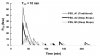
The third figure (also from the Doolette / Gerth paper) labelled T 1/2 = 10 min depicts the tissue supersaturation (expressed in feet of seawater) in a fast tissue (with a short half life) during the decompression according to all 3 profiles. You can see that early in the decompression the NEDU non-deep stop profile (A1) causes the greatest supersaturation in this fast tissue, followed by the NEDU deep stops profile (A2) with the least supersaturation being caused by the RGBM deep stops profile. Thus, the deep stops profiles are doing exactly what they are supposed to do... limit supersaturation in the fast tissues early in the ascent, and the profile with the deepest stops is doing that most effectively.

However, at this point it is worth reflecting once again on the results of the NEDU study. Despite the fact (as you can see from the T1/2 = 10 min figure) that the NEDU deep stop profile (A2) reduced supersaturation in the fast tissue when compared to the non-deep stop profile (A1), the deep stop profile still resulted in a significantly greater incidence of DCS. If reducing supersaturation in fast tissues in the early stages of decompression (which is what deep stops do) was the vital strategy, why would you see a result like that?

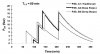
This brings us to the final figure labelled T1/2 = 80 min. This depicts the tissue supersaturation (expressed in feet of seawater) in a slower tissue (with a longer half life) during the decompression according to all 3 profiles. What is clear here is that the supersaturations caused by the NEDU non-deep stop profile A1 are smaller and less sustained than either of the deep stop profiles (including RGBM) which are actually quite similar to one another. This supersaturation difference in slower tissues toward the end of the dive between the non-deep stop model and the two deep stop models (including RGBM) is a highly plausible and obvious explanation for the NEDU results which, I would suggest, suddenly don't look so irrelevant.

When this was presented at the workshop there ensued a debate between Bruce Wienke and Wayne Gerth in which Bruce invoked complicated bubble dynamics to explain why you might get a paradoxical result like this, whereas Wayne emphasised the fundamental role of supersaturation in driving bubble formation and observed that the NEDU study showed that emphasising prevention of supersaturation in fast tissues early in the ascent did not seem to be of benefit, especially if that was accompanied by worse supersaturation of slow tissues later in the ascent.

The point I would like to make is that there are very good reasons for not dismissing the NEDU study as "irrelevant" just because the profile did not conform exactly with a typical technical diving bubble model profile. The RGBM profile was not included in the testing program at NEDU so we cannot rule out the possibility that an even greater reduction in supersaturation of fast tissue (depicted in the T1/2 = 10 min figure) early in the decompression might have a beneficial effect later in the dive, but as Gerth would point out, if such a reduction were important, we would have expected to have seen at least some benefit from the reduction (again depicted in the T1/2 = 10 min figure) that was achieved the NEDU deep stop profile (A2) when compared to A1.

So, I suppose I return to my constant refrain. Notwithstanding any weaknesses in the relevant data, virtually all of what is available does NOT support Ross's claim of superiority for bubble model / deep stop approaches (a claim that has absolutely no evidence base of its own) and simply acknowledge what the scientific community have already said: we don't know.

Simon M

 

Attachments

  • RGBM recommended.jpg
    RGBM recommended.jpg
    54.8 KB · Views: 39
  • NEDU and RGBM profiles.jpg
    NEDU and RGBM profiles.jpg
    78.1 KB · Views: 41
  • Supersaturation fast tissue.jpg
    Supersaturation fast tissue.jpg
    69 KB · Views: 39
  • Supersaturation slow tissue.jpg
    Supersaturation slow tissue.jpg
    83.5 KB · Views: 39
Last edited:
Hi Gian,

not have been made enought tests to know this (we know for now of just this one), but I suspect with all similar profiles is the same.

Sent from my GT-I5800 using Tapatalk 2

Tx.

I think that if we input the exact profile of these VPM dives into the CDM-18 model, then we can find out if any of the 18 non-VPM man-tested models pose similar arterial bubble risk as VPM.

If CDM-18 passes as "safe" the VPM dive profiles adopted in the research piece, then, all other things being equal, all 18 models may pose the same risk as VPM.
 
Bruce was present at the Deep Stops workshop and, not surprisingly given that he created the RGBM, he is a proponent of deep stops. Nevertheless, he and just about every other relevant expert in the world were part of the consensus group from which emerged the acknowledgement that the evidence in relation to the relative efficacy of deep stop vs non-deep stop profiles is conflicting.

Since you seem very interested in this issue, why don't we consider the issue of relevance of the NEDU study a little more closely. Table 10 (attached below) comes from Bruce Wienke's Deep Stops workshop paper (that is, from Bruce himself). It lists the two NEDU profiles (NEDU 1 = the deep stops profile and NEDU 2 shows the non-deep stops profile) and RGBM profile (labelled LANL) recommended by Bruce for this dive. As you might expect it has deeper stops than the NEDU deep stops profile. These 3 profiles are then plotted together on the profile figure and is labelled as B5 (A1 is the NEDU non-deep stops profile, and A2 is the NEDU deep stops profile). This comes from Wayne Gerths' paper (with David Doolette and Keith Gault) at the Deep Stops Workshop. I should point out that there is a minor error in the depiction of the profiles in that the shallowest stop should actually terminate at 195 minutes in the RGBM profile and 206 minutes in the NEDU profiles. The most obvious difference between the NEDU deep stops profile and the RGBM profile is the deeper stops in the RGBM profile.

If tests go towards reducing the rate of ascent, according to the conceptual model of the thermodynamic Hills including Jones perfusion model, we can talk about something. The chart shows that you placed that not altering with the speed of ascent. which on the basis of models Hills and Jones still is not a reasonable speed.
The initial ascent phase releases a large mass of inert gas. This can be demonstrated using a model of Jones and B..A Hills Cole B. 1993
It will be a real bomb.
Source "Fundamentals of Pathophysiology Dives" edited doc.dr med Habili.Karzinierz Ulewicz Military Medical University page 134

http://rebreathers.pl/forum/download.php?id=100

"To confirm that the diffusion is not a limiting factor for the tissue saturation, Jones presented the results of tests in which the mean rate of leaching of the human body other gases, namely, helium, krypton or xenon radioactive. Presented the results compared to the values obtained for nitrogen indicates that leaching rate of the gas is characterized by a uniform density half-periods for the tissue water. contrast, half-saturated fat is different due to the different value of the partition coefficient.
To the validity of this position, at least for well-perfused tissues, appealed to the results published by Kety'ego. "
The application quite obvious as msay knows compartments (BA Hills B Cole 1993).

http://rebreathers.pl/forum/download.php?id=104

In the current models do not take into account the amount, that needs to be released at the beginning of decompression.

rc greet
 
Last edited:
Tx.

I think that if we input the exact profile of these VPM dives into the CDM-18 model, then we can find out if any of the 18 non-VPM man-tested models pose similar arterial bubble risk as VPM.

If CDM-18 passes as "safe" the VPM dive profiles adopted in the research piece, then, all other things being equal, all 18 models may pose the same risk as VPM.

...if someone can post or email me the Data Points of the 3 dives on page 25 here http://jap.physiology.org/content/early/2010/09/02/japplphysiol.01369.2009.full.pdf , then I can input them in CDM-18, and we will know if the arterial gas problem is unique to VPM, or common to other models.

If it is common to other models, this helps Ross case, but opens up a number of issues about "deep" diving (and Dr. John Lippmann may have a strong point).
 
Ross,

I don't know if it worries anyone else, but it is of concern to me that your description of the cessation of the NEDU study has morphed from this...

* Next - and this is the kicker; the test was stopped because the base line control model (VVAL18) - was about to drop out the bottom of the test limits and invalidate the entire project - snip - I'll say it again - this test stopped because the VVAL 18 control model datum, was 5 dives short of mandatory invalidation of the entire project!

...to this...

Yes - its a semantic argument I agree - the results were in at the 3/4 mark, so why not just stop there.

...after being challenged.

To me it seems indicative of being prepared to essentially make up a story so long as it suits the agenda. In that regard....

But the argument presented by your road show, and others was something else.

...is another perfect example. What do you mean by attributing a "road show" to me? I have never spoken about deep stops at a diving meeting (or any other meeting for that matter) in my life (though that will change in February at a meeting in Slovenia). This is simply a lie.

And there is more:

"Look how terrible it was.. we have to stop this now".

I don't know of anyone who has said anything like this, and attributing this to me is grossly unfair given that I chaired a workshop consensus discussion that produced a very balanced statement given that the weight of evidence presented at that meeting did not favor deep stops.

If this is the level that your arguements are descending to then my involvement in this thread is probably over. I think people have got the message.

Simon M
 
Last edited:
Ross H, from somebody who is a layman in these matters but who has bought and recommended your products... you are not showing yourself in a good light on this subject.
 
... I should point out that there is a minor error in the depiction of the profiles in that the shallowest stop should actually terminate at 195 minutes in the RGBM profile and 206 minutes in the NEDU profiles.

A little error? Its almost 2 hours wrong.

The RGBM times are a run time from start of deco. His dive is over after (30 mins bottom + 60 deco) = 90 mins Total.

The A1 and A2 profile are individual stop times. They all compound together to reach (30 mins bottom + 174 deco) = 204 mins Total.

I don't know who drew the diagrams, but they are not right. Someone got the times badly mixed up. Its really sad. All that work based on a big math error :clap:


Deco times various models - 170 ft 30 air

174 = A1 and A2
58 = ZHL-16B <<< the fastest of all.
60 = RGBM
72 = USN workman
82 = VPM-B


You see how the two test profiles are ridiculously long? Why do you think that is Simon?
.
 
Last edited:
...if someone can post or email me the Data Points of the 3 dives on page 25 here http://jap.physiology.org/content/early/2010/09/02/japplphysiol.01369.2009.full.pdf , then I can input them in CDM-18, and we will know if the arterial gas problem is unique to VPM, or common to other models.

If it is common to other models, this helps Ross case, but opens up a number of issues about "deep" diving (and Dr. John Lippmann may have a strong point).

Hi Gian,

geave me some time and I will try to send them to you if you can not extract them from the document.

Igor P
 
Hi Gian,

geave me some time and I will try to send them to you if you can not extract them from the document.

Igor P

The graph from the document is not accurate enough.

You can email the data points to gian @ gian.ameri.name (no space).

I will input the data in CDM-18 and if no objection is received by then I will publish the result for everybody to see.

It will show if any of the man-tested models (non-VPM) validate or invalidate those specific dive profiles (my understanding of CDM-18).

It could not be more objective and factual.
 
Last edited:
A little error?

The RGBM times are a run time from start of deco. His dive is over after (30 mins bottom + 60 deco) = 90 mins Total.

The A1 and A2 profile are individual stop times. They all compound together to reach (30 mins bottom + 174 deco) = 204 mins Total.

I don't know who drew the diagrams, but they are not right. Someone got the times badly mixed up. Its really sad. All that work based on a big math error :clap:


Deco times various models - 170 ft 30 air

174 = A1 and A2
58 = ZHL-16B <<< the fastest of all.
60 = RGBM
72 = USN workman
82 = VPM-B


You see how the two test profiles are ridiculously long? Why do you think that is Simon?
.

Was just searching the profiles as they were published on TDS, you beat me...

Yes the comparison between RGBM and NEDU profiles is not relevant as they are totally different.

This is what others, you and I are saying all the time. The profiles are so different from the real sport diving profiles that the study does not show anything that would be relevant to our diving.

If we enter the multilevel dive of BVM3 model in V-planner or GAP-RGBM we find that both models require deeper stops to lower the supersaturation of fast tissues and microbubble growth, so that they stay in stable limits where they do not merge together to create bigger bubbles and can be safely transported to lungs. The results of the study could be provoked exactly here because of this deeper missed VPM-B and RGBM required stops. It is true we can not know as in the study no profile similar to VPM-B or RGBM was used.

RGBM profile with Recreational conservatism (most conservative in ANDI-RGBM planner) for 30 min including descent at 170ft and complete decompression using air the total runtime would be 157 minutes. Descent 66ft/min ascent 33ft/min. If we calculate same dive with bottom time of 30 min without descent the runtime is 172 min total runtime.

Table 6. Comparative NEDU Air Deep Stop Schedules
NEDU 1 NEDU 2 LANL
depth time time time
(fsw) (min) (min) (min)
170 30 30 30
120 0.5
110 1.5
100 2.5
90 3.5
80 4.5
70 5.0
70 12 5.0
60 17 7.0
50 15 11.0
40 18 9 14.5
30 23 23 22.0
20 17 52 28.5
10 72 93 59.9
206 207 195
ZHL risk 5.6% 2.4% 3.4%
RGBM risk 10.6% 3.2% 2.6%

This scedule - RGBM is just comparative that wants to get as close as possible to the NEDU profiles If I can speculate, as it can not be calculated in any RGBM decoplanner.
 
Last edited:
All that work based on a big math error :clap:
The errors I would not scream so much.

You expected to participate the growth of tissue saturation of 10% elongation does not cause a large decompression.
I quickly pointed out that it is different to grow significantly.
A similar result will be in the other models I know, You also know it.

Do you take into account the amount of inert gas releasing during the initial phase of decompression, according to the model Hills and Jones?
Jones is a model multi-tissue perfusion, within the meaning of the actual tissues.

rc greet
 
Ross has the data and the CDM-18, so to avoid duplication of effort I asked him if he could post the results.

CDM-18 is just a means of comparing lots of models in one go with a single input (my understanding)

My view is that if my profile (V-Planner calculated, for example) passes all models (plus VPM), then I cannot do any better than that (for planning purposes).

The arterial gas problem and "why" is the real issue from the research. Not which model was used (if as I expect the VPM dive profiles used are validated by CDM-18).
 
Last edited:
The errors I would not scream so much.

You expected to participate the growth of tissue saturation of 10% elongation does not cause a large decompression.
I quickly pointed out that it is different to grow significantly.
A similar result will be in the other models I know, You also know it.

Do you take into account the amount of inert gas releasing during the initial phase of decompression, according to the model Hills and Jones?
Jones is a model multi-tissue perfusion, within the meaning of the actual tissues.

rc greet

RC, the language thing is getting in the way I think. The 10% was just a guess for the absolute worst state. Its not the actual amount. The example did not need a real calculation.

No, I have not seen a Hill / Jones model. Send me a link here please: support@hhssoftware.com

thanks.
 
I have a more recent version of CDM-18 than Ross... so I entered the data for one of the dives (they are all very close to each other) and sent the .pdf to Ross before it is posted for Ross to check for errors.
 
RC, the language thing is getting in the way I think. The 10% was just a guess for the absolute worst state. Its not the actual amount. The example did not need a real calculation.

No, I have not seen a Hill / Jones model. Send me a link here please: support@hhssoftware.com

thanks.

I would like to see it too if possible.

Sent from my GT-I5800 using Tapatalk 2
 
Back
Top