What's your Low Gradient Factor Selection

Which Low Gradient Factor are you using?

  • 0-10

    Votes: 6 3.1%
  • 11-20

    Votes: 17 8.7%
  • 21-30

    Votes: 58 29.7%
  • 31-40

    Votes: 61 31.3%
  • 41-50

    Votes: 28 14.4%
  • 51-60

    Votes: 7 3.6%
  • 61-70

    Votes: 3 1.5%
  • 71-80

    Votes: 6 3.1%
  • 81-90

    Votes: 8 4.1%
  • 91-100

    Votes: 1 0.5%

  • Total voters
    195
When one comes to the realization that most of the posts here with fancy charts and intellectual conversations are
in fact just attempts to justify one line of thought, they do nothing to further the exploration of proper deco procedures.

So yes what you have done here is...Armed with knowledge provided by the industries leading experts.. come the conclusion with
some conservative experimenting arrived at the same conclusion which they all acknowledge regarding the application of "Modern Deco Theory".

If we all took this approach and quantified the results as a whole then we would have some factual basis as to why and when we are using the deco procedures we are using.

Until then we are just filling up internet space with Half truths and pseudo science, just look at the outcome of some of those discussions on the forums
if you need further evidence:-)

Henry

Well said.

Sent from my PAP4500DUO using Tapatalk 2
 
Are people adding any Pyle type pauses on the more aggressive 50+ low GF deco or going straight to the 1st stop as called by the schedule?


Sent from my iPhone using Tapatalk


Streight to the first stop as fast as I feel comfortable with which is usualy 6-7m / min. I do try for 9 but its tooooo scary for me.

ATB

Mark
 
I should probably not post this but will anyway as this forum seems to be a open and a friendly place.

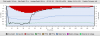
On a recent project as a team we decided to use 90/90 GF. The conditions where 3-5c from 72m up to around 18m where the water got increasingly warmer, at 6m temp was a balmy 15C. It would not make much sense to hang out in the cold water doing deep stops in these conditions. We where a team of 6 diver doing around 70 dives. Diving every day more or less for 2 weeks. None got any DCI. We slowed down the ascent a bit from 50m but not by much. Also we often did a few extra minutes on the shallow stops so the GF high in reality was probably around 85/90. The dive times where in the range of 120min-160min total time on all the dives and depth 70-72m.

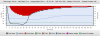
Interestingly enough i did get a minor leg hit using 35/90 2 days before we switched to 90/90. Now this does not prove anything really... It does prove that over 70 dives no noe got bent using 90/90 though. Not worth much so take it for what it is.

A typical profile. As seen a short deepish stop added at around 35m. On this dive it was unusually long. We where filming deco shots. The water temp graph is the blue line.

Skärmavbild 2014-04-24 kl. 15.21.10.png

The profile i got a minor leg hit from using 35/90

Skärmavbild 2014-04-24 kl. 15.24.28.png
 
Hi,

For me, you can not just chose your "GF's" one for all.
Air = one type of GF
Tx<30% He = one type of GF (less than 30% He) "normoxic"
Tx<30% N2 = one type of GF (less than 30% N2) "hypoxic"

Depending of wich is your directing inert gaz the deco profil must be different.
My 2ct
 
Hi,

For me, you can not just chose your "GF's" one for all.
Air = one type of GF
Tx<30% He = one type of GF (less than 30% He) "normoxic"
Tx<30% N2 = one type of GF (less than 30% N2) "hypoxic"

Depending of wich is your directing inert gaz the deco profil must be different.
My 2ct

Mike

Assuming you mean that with high He content you would slow the ascent by inclusion of deeper stops / lower low-GF, would you be prepared to speculate on how much you would adjust ?

I cannot remember diving on air on CCR :)

Ar cienu
TB.
 
I was always unconvinced by deep stops but did not have the sufficient theoretical understanding to fight the trend and so ran with the herd for a few years. However about 5 years ago I changed to a 50 / 85 profile, which has been without incident.
 
I was always unconvinced by deep stops but did not have the sufficient theoretical understanding to fight the trend and so ran with the herd for a few years. However about 5 years ago I changed to a 50 / 85 profile, which has been without incident.

iv been saying it for years ,

that Pyle, bollox you find in a good number of my posts , lol

proplanner is going to make a come pack , kev will be once again in the pink
 
I started with 20/80 and now dive 15/85.

70m, 30 mins, 10/52, 15/85, first stop 45m, total time 120 mins.
70m, 30 mins, 10/52, 50/85, first stop 33m, total time 112 mins.
70m, 30 mins, 10/52, 85/85, first stop 27m, total time 106 mins.

Matt.
 
Last edited:
I started with the standard defaults that came on my Vision years ago (cannot remember what they were) Then after getting bent I switched to running 30/70 on "advice" of another dive who was prone to getting bent & have been bend free since. I will admit that I have no damned clue about GF or even which number means what ! As they say ignorance is bliss ! My dive planning revolves around stay until I have had enough or the TTS displayed is p******* me off ! Run times upto 150 minutes, depths down to 80m & gas around 10/50he but varies a little. I find that the biggest factor for me feeling crap after a dive is if I ascend straight from 6m or if I stop for 1 minute every metre from 6m .
 
Last edited:
I started with the standard defaults that came on my Vision years ago (cannot remember what they were)

15/85

I will admit that I have no damned clue about GF or even which number means what !

gradient-factorgraph_zpsd9122773.png


It's not a complicated as it first seems. As you ascent from high pressure (top right is highest pressure, where the blue arrow is) the tissue pressure becomes supersaturated - of course supersaturation is needed to off-gas, so this is fine (all values to the left of the black line are supersaturated). The amount of over saturation that is considered safe is governed by the red-line; this is Buhlmann's m-value line. It's what GF's call the 100/100 line - 100% of the m-value line is used.

To slow down the ascent GF sets a low value to control the deep stops and a high value to control the shallow ones. It's just a percentage of the m-value line. The green line shows GFLo=20 and GFHi-80 (20/80). At the top you see the %'s for GFLo and at the bottom GFHi.

In most cases you do not follow the line but put steps (at 3m) beneath. But the Vision, and also the VR3, does enable continuous decompression so you can pretty much follow those lines by following the numbers on the Vision (or the little-man on the VR3).

Apologies in advance if this is not useful/wanted :-)

Cheers
Matt.
 
Matt
Thanks for that but I profess to being a total numpty with regards to deco theory etc. The explanation is wanted/needed but unfortunately for thicko me is about as good as a chocolate tea pot :)
 
Matt
Thanks for that but I profess to being a total numpty with regards to deco theory etc. The explanation is wanted/needed but unfortunately for thicko me is about as good as a chocolate tea pot :)

I agree that not knowing the theory is not a practitioners-show-stopper. But I reckon it's useful to know the implication of fiddling with the numbers on your handset. For your 80m example:

80m, 30 mins, 10/52, 15/85, first stop 51m, total time 149 mins (last stop 56 mins).
80m, 30 mins, 10/52, 30/70, first stop 48m, total time 167 mins (last stop 68 mins).
80m, 30 mins, 10/52, 100/100, first stop 30m, total time 113 mins (last stop 42 mins).

So as you see, 100/100 comes shallower quicker (18-21m) and is shorter (36-54mins). I don't know anyone diving this other than for emergency exits.

The different between GFLo 15 and 30 brings you just 1 stop depth shallower (51m->48m) and extends the last stop by 12 mins (the other mins are peppercorned in the profile).

Perhaps not the big difference some people imagine?

50/85 is basically shaving 12 mins - 4 from the missed deep stops (51m-42m) and the 8 mins from the mid-range (a minute here and there) when compared with 15/85.

80m, 30 mins, 10/52, 50/85, first stop 39m, total time 137 mins (last stop 54 mins).

Cheers
Matt.
 
I recommend to everybody watch the conference of Dr. Doolittle about deep stops: Check out this video on http://www.rf30.org/presentations/de...ssion-methods/ ***8212;***8212;


Sent from my iPhone using Tapatalk

Just watched the video posted by Crls - well worth watching and good to see some hard experimental data.

In summary -

1. better off spending the extra time shallower for the overall same dive time

2. Switching to nitrox decompression vs Heliox decompression results in similar number of dcs cases, but in the case of nitrox decompression, you are less likely to get a scary type 1 bend...

(Does anyone have any thoughts of how this may apply to trimix in a rebreather sounds like it is saying we may be better off switching diliuent and moving to nitrox only deco in the rebreather)

Is anyone doing this now (ie switching to a nitrox diluent for deco), or as I believe, are most people sticking with the same trimix diluent throughout the dive?
 
Last edited:
I'm glad you watched the video , very interesting. If you want more info there is a list on NEDU with probabilistic model that has a lot info on deep stops also. Look on Rubicon


Sent from my iPhone using Tapatalk
 
The bit that really caught my eye was the idea that maybe we should be using nitrox as dil for the deco phase of the dive to reduce the probability of a type 1 neuro bend?!
 
HELIOX TO NITROX GAS SWITCH MAY NOT ACCELERATE DECOMPRESSION FOR BOUNCE DIVES
It is not clear that the apparent differences in bounce diving decompression resulting from different inert gases are real.
Figure 3
Comparison of incidences of Type I and Type II DCS during development of constant 1.3 atm inspired PO2-in-helium decompression schedules:30,31 left (Heliox) and during development of surface supplied (84/16 He/O ) decompression schedules;32
2
right (Gas Switch). Only the latter employs a switch to air
breathing during decompression. Although there are substantial differences between these two types of diving, dives were across a similar range of depths and bottom times and resulted in similar overall incidences of DCS (actual number DCS/dives indicated above bars). Although these studies were not designed for this purpose, the different incidences of Type II DCS are noteworthy.
Direct measurement of helium and nitrogen exchange rates in faster exchanging tissues relevant to bounce diving indicates very similar rates of exchange for nitrogen and helium.24 These latter data suggest heliox, nitrox, and trimix decompression from bounce dives of the same depth and duration should be similar. This is supported by the finding that wet, working no-stop dives to 60 fsw (18 msw) for bottom times of 70 to 100 minutes showed a similar incidence of DCS whether breathing air or heliox (21% oxygen), indicating a similar rate of helium and nitrogen uptake and similar decompression requirement.28
The scant data relevant to actual decompression diving can be interpreted as ***8216;conflicting***8217;. The oft-cited work supporting accelerated decompression by switching from heliox to nitrox in fact shows nothing of the sort.29 This work presents several dives with changes in inert gas composition and increases in oxygen fraction up to 100% during decompression and compares decompression time to schedules from (or extrapolated from) the US Navy 1957 Standard Air Tables that were not actually tested. Later experiments comparing dives with heliox-to-air gas switching to dives with all heliox decompression are confounded by different decompression schedules and small numbers of dives, particularly on the schedules that provoked DCS.5 On the other hand, a US Navy man-trial indicated that a heliox to nitrox switch does not accelerate decompression.30 In that study, 32 man-dives to 300 fsw (approx. 90 msw) for 25 min breathing 1.3 atm inspired oxygen partial pressure (PiO2)-in-helium for the entire bottom time and throughout the 190 minutes of decompression resulted in only one case of DCS, whereas 16 man-dives with an identical depth-time profile and P O
i2 but a switch to nitrox at the first decompression stop (110
fsw, approx. 33 msw) resulted in three DCS. This difference in incidence does not reach statistical significance, but there is a strong trend indicating no advantage (and perhaps even a disadvantage) for the gas switch.
In very long decompressions, nominally over 10 hours, a switch from heliox or trimix to nitrox late in decompression may accelerate decompression. This is because the long shallow stops of such ***8216;sub-saturation dives***8217; are governed by the slow compartments that govern saturation decompression in a similar way, in which helium exchanges faster than nitrogen. However, there is no direct experimental evidence to support this. Another possible advantage of a heliox-to- nitrox gas switch is that it may result in less Type II DCS (Figure 3).
Inner-ear decompression sickness
Although a heliox-to-nitrox breathing gas switch may accelerate decompression in a very long dive, and may result in less Type II DCS, such switches have also been associated with the onset of DCS involving the vestibulocochlear apparatus (inner ear).33***8211;36 Though infrequent, inner-ear DCS is of particular concern to technical divers because debilitating symptoms characteristically onset during decompression and are life-threatening for a scuba diver with substantial remaining decompression obligation.36


*********+
29 Keller H, Bu***776;hlmann AA. Deep diving and short decompression by breathing mixed gases. J Appl Physiol. 1965;20:1267-70.
32 Tikuisis P, Nishi RY. Role of oxygen in a bubble model for predicting decompression illness. Report. North York (ON, CAN): Defence and Civil Institute of Environmental Medicine; 1994 Jan. Report No.: 94-04.
33 Farmer JC, Thomas WG, Youngblood DG, Bennett PB. Inner ear decompression sickness. Laryngoscope. 1976;86:1315-27.
36 Doolette DJ, Mitchell SJ. A biophysical basis for inner ear decompression sickness. J Appl Physiol. 2003;94:2145-50.
 
The bit that really caught my eye was the idea that maybe we should be using nitrox as dil for the deco phase of the dive to reduce the probability of a type 1 neuro bend?!

I've tried this many years ago when it was fashionable. Flush to air, typically 42m (I tried 60m too!). But I feel very bent afterwards.

In my book deep stops are really just slow ascents.

YMMV, of course.

Matt.
 
I think you are right on the bit about deep stops are in reality a means of making a slow ascent. - probably just addressing the fast tissues that may otherwise cause issues. Whilst I have personally never scrimped on the shallow stops, I think that the times i have had niggles in the past have been where the early ascent has been too fast.
 
Last edited:
Back
Top